Bargains! PROMOTIONS


Caleb Bernacchio holds the Legendre-Soulé Chair in Business Ethics at Loyola University New Orleans and is an associate professor of management. He received his PhD in Business Ethics from IESE Business School, an MBA from Louisiana State University, and a BPhil in Philosophy from the Pontifical University of St Thomas Aquinas in Rome. He has published widely in academic journals, is on the editorial board of Business Ethics Quarterly and Philosophy of Management, and, in 2024, was given the Outstanding Reviewer Award by Business Ethics Quarterly. His research focuses on neo-Aristotelian virtue ethics and organizational theory. Robert Couch is Associate Professor of Business (Finance) at Earlham College. He received his Ph.D. in Financial Economics from Carnegie Mellon University, and has published numerous research articles on topics spanning corporate finance, financial reporting, and business ethics.
'Bernacchio and Couch offer a compelling neo-Aristotelian framework for business, challenging conventional views of the firm and market efficiency. They argue that human flourishing, not mere profit or Pareto efficiency, should be the ultimate aim. This requires embedding the virtues and practical wisdom in organizational strategy and fostering stakeholder deliberation. This work 'cracks the code' on how to connect virtue ethics to strategy and corporate governance.' Alejo José Sison Galsim, University Professor, Universidad de Navarra 'This excellent book offers a distinctive account of business ethics based on the novel concept of 'eudaimonic efficiency'. In so doing, it demonstrates the value of an Aristotelian perspective for understanding the ethics of the marketplace.' Matthew Sinnicks, University of Southampton 'This is a book I have long been waiting for: to make a robust argument in defense of neo-Aristotelian virtue ethics not only in the context of the firm but, more broadly, in the context of the market economy, by placing virtue at the heart of human agency. Bernacchio and Couch do not narrowly address business ethics per se, but they richly suggest ways in which ne-Aristotelian approaches helps us reconceive the firm, strategy and the market economy at large, in ways that place human flourishing at the center. This is no small accomplishment, and it is exactly what we need: to make ethical thinking integral to business and, critically, to theoretical reflection about business. The book is an intellectual feast for the philosophically inclined management and organizational scholars. Invariably illuminating, it engages with several rival perspectives, offering conceptually integrative, robust and original arguments. This is a major contribution.' Haridimos Tsoukas, University of Cyprus & University of Warwick
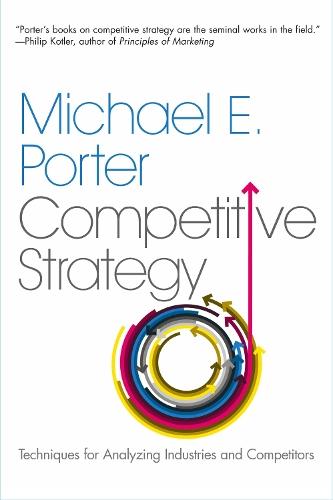
The Competitive Strategy
Techniques for Analyzing Industries...
Paperback
$45
Not in-store but you can order this
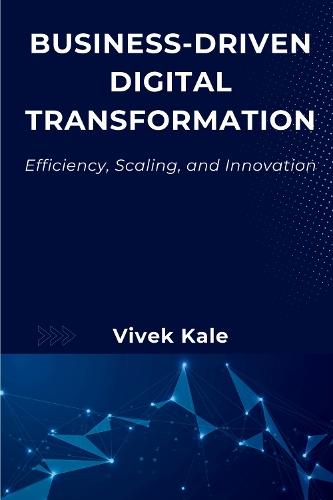
Business-Driven Digital Transformation...
Efficiency, Scaling, and Innovation...
Paperback
$73.99
Not in-store but you can order this
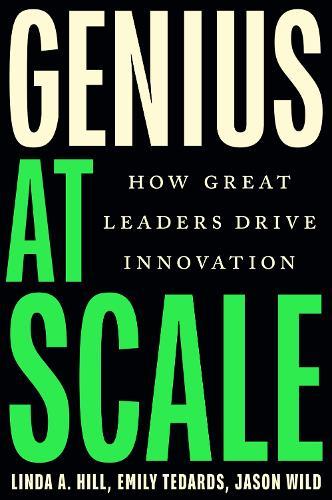
Genius at Scale
How Great Leaders Drive Innovation...
Hardback
$57.99
Not in-store but you can order this
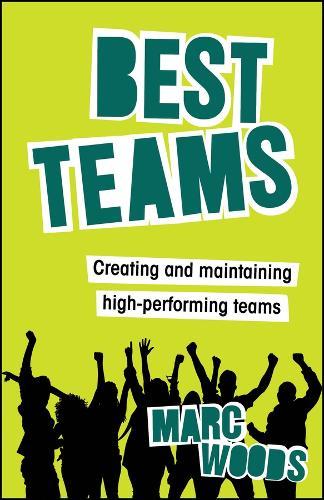
Best Teams
Creating and Maintaining High-Performing...
Paperback
$30.95
Not in-store but you can order this