Bargains! PROMOTIONS


William R. Haycraft worked for many years in international marketing for Caterpillar Inc.
"""The best book yet on this important industry."" -- Bruce E. Seely, Technology and Culture ""Written in a straightforward style, this book is intended for engineers as well as for students of business history."" - Civil Engineering ""A vivid, photo-rich account of the development of the earthmoving equipment industry from its beginnings in mechanized agriculture to the mid-1990s... American in perspective yet international in scope, Yellow Steel is an invaluable document for those who are interested in modern industry and infrastructure."" -- Michael R. Fein, Business History Review ""[Haycraft] presents a comprehensive, thoroughly researched and well-written history of the manufacturers of earthmoving equipment from 1831 to 1995... Haycraft has filled a void in the construction equipment publishing field... For those who want to explore the rich history behind the equipment ... Yellow Steel is an invaluable resource."" - Thomas Berry, Historical Construction Equipment Association ""Anyone who wonders at the immensity of earthmoving equipment and wants to understand the long history of that industry should read Yellow Steel. -- Tomas Nonnenmacher, Journal of Economic History ""Haycraft marshals a tremendous amount of information and ably presents the complexities of this industry's fascinating history. He has produced a valuable historical survey that will serve as a good reference work for historians as well as satisfy the curiosity of the general reader."" -- Daniel A. Clark, Journal of Illinois History ADVANCE PRAISE ""This is a cogent commercial and technical history of the machines humans have devised to reshape the earth. Clearly written, straightforward, and devoid of bombast and corporate chauvinism, Yellow Steel is a readable and useful book for casual historians as well as those with strong ties to the industry.""- Craig Canine, author of Dream Reaper ""A significant addition to the history of technology. Haycraft's experience within the industry and his sense of practical macro-economics lend a very real measure of authority to his observations."" - Robert C. Williams, History Department, Clarendon College"
The Sustainability of Nanotechnology...
A Scientific Approach
Hardback
$446.95
Not in-store but you can order this
Some Complex Phenomena in Fluid...
Hardback
$394.95 $315.59
Not in-store but you can order this
Semiconductor Quantum Light Sources...
Fundamentals, Technologies and Devices...
Paperback
$166.95 $133.70
Not in-store but you can order this
Smart Electric and Hybrid Vehicles...
Advancements in Materials, Design,...
Hardback
$346.95 $277.58
Not in-store but you can order this
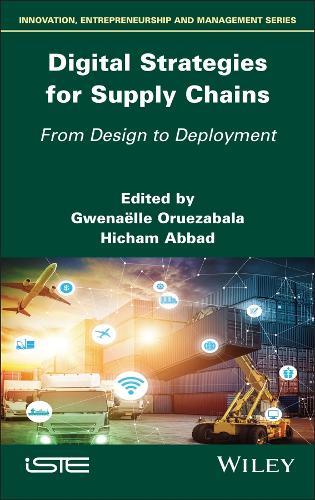
Digital Strategies for Supply Chains...
From Design to Deployment
Hardback
$405.95 $324.81
Not in-store but you can order this
Hypersonic Slender Body Aerodynamics...
Hardback
$316.95 $253.38
Not in-store but you can order this