Bargains! PROMOTIONS


Elaine Allensworth is the Lewis-Sebring Director of the University of Chicago Consortium on Chicago School Research and a research professor at the Crown School of Social Work, where she has conducted research on educational policy and practice for over 25 years. Her research examines factors influencing students’ educational attainment, school leadership, and school improvement. She works with policymakers and practitioners to bridge research and practice, serving on panels, policy commissions, and working groups at the local, state and national levels. Her research on the factors that predict whether students will drop out of high school has shifted the conversation from factors that schools cannot control to factors that schools can influence; school districts across the country have adopted early warning indicator systems based on her research. Her work on school leadership has documented the ways in which organizational structures in schools influence improvements in student achievement. Dr. Allensworth has been the principal investigator on research grants from funders such as the Institute of Education Sciences, the National Science Foundation, and the Bill and Melinda Gates Foundation. She has received a number of awards from the American Educational Research Association for outstanding publications. She holds a doctorate in sociology from Michigan State University and was once a high school teacher.
This book is an essential guide for how to select the right data and then use them to achieve better educational outcomes. Allensworth’s advice combines research on data quality coupled with the practical acumen she acquired through advancing educational opportunities in Chicago. A must-read for anyone seeking to improve our nation’s schools. -- Anthony Bryk * Half Moon Bay, California * Drawing on her experience helping schools use data effectively, Allensworth provides clear and compelling guidance on how educators can use data to improve student outcomes. Along the way, she clarifies all the hot-button issues of test scores, GPA, early warning systems, and surveys. -- Bob Balfanz * Baltimore, Maryland * Data aren’t just a tool for tracking progress—they’re a key ingredient in fostering collaboration and understanding across the entire school community. Whether for teachers, families, or students, the way data are used to communicate goals and expectations can truly shape how we support every child’s growth and success. -- Kristopher Kwiatek * St. Clair Shores, Michigan * Using Data to Improve Schools is an essential guide for educators seeking to transform their schools through the power of data. By providing practical strategies and clear examples, this book empowers educators to move beyond simply collecting data to using data to drive meaningful and equitable school improvement. -- Tamara Daugherty * Orlando, Florida * Allensworth has a wonderful way of engaging readers in the possibilities of using data to motivate all parties in sustained school improvement while understanding the context. Data by itself is not enough to transform a good school into a great school. Allensworth helps the reader to understand many different approaches. -- Cynthia Kay Barron * Chicago, Illinois * Using Data to Improve Schools does an excellent job of articulating how practitioners should select, utilize, and interpret data for improving student outcomes in schools. The book provides clear examples of data that can support or impair school improvement goals. As an education policy advocate, I strongly recommend this book to inform how we can best support school leaders and stakeholders engaged in school improvement efforts. -- Rebecca Vonderlack-Navarro * Chicago, Illinois * Systems get the results they’re designed for. Allensworth shows how to improve school systems through the enlightened use of data—data that serve not as a knuckle-rapping tool of inspection, but as the key navigational aid that unlocks progress. It’s a principled, practical, and immediately usable playbook. -- Dan Heath * Durham, North Carolina *
From principle to practice
Evidence-informed leadership
Paperback
$35.99
Not in-store but you can order this
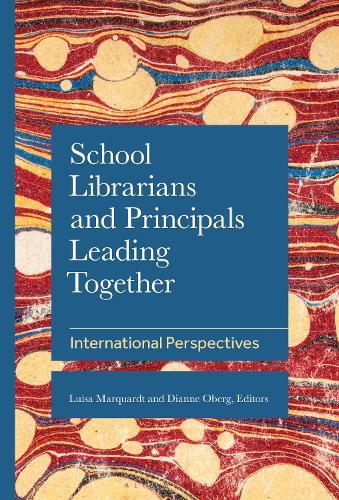
School Librarians and Principals...
International Perspectives
Hardback
$200
Not in-store but you can order this
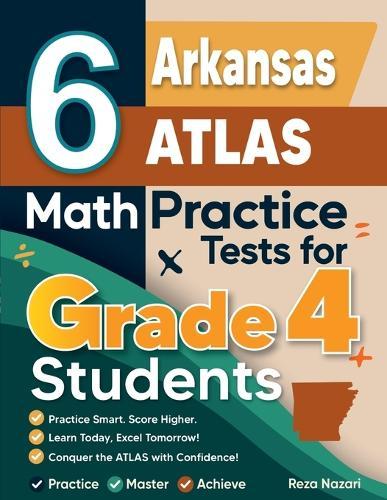
6 Arkansas ATLAS Grade 4 Math Practice...
A Complete Guide to Building Math...
Paperback
$33.95 $30.23
Not in-store but you can order this
The researchED Guide to Leadership...
An evidence-informed guide for teachers...
Paperback
$26.99
Not in-store but you can order this
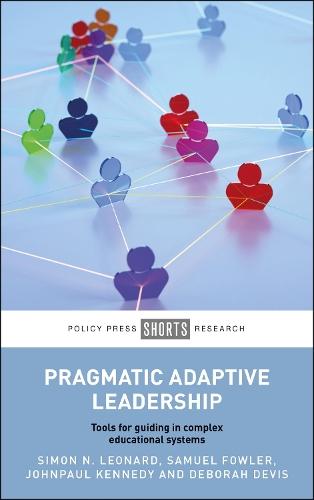
Pragmatic Adaptive Leadership
Tools for Guiding in Complex Educational...
Paperback
$30.95
Not in-store but you can order this
Virtuous Educational Leadership...
Doing the Right Work the Right Way...
Paperback
$86.99
Not in-store but you can order this