Bargains! PROMOTIONS


Ron McLeod holds an Honours degree in Psychology, an MSc in Ergonomics and a Ph.D. in Engineering and Applied Science and has spent more than 40 years as a Human Factors specialist working primarily in safety critical and high hazard industries. Ron has been influential helping industry learn, develop, and apply best practice in Human Factors in the management of major hazards. As well as his 2015 book, ‘Designing for Human reliability: Human Factors Engineering in the Oil, Gas and Process Industries’, Ron has published more than 30 papers in the technical and scientific press in his own name, as well as contributing to numerous industry guides and best practices produced by a variety of professional and industry bodies. He has taken an active, and often a leadership, role in organisations including the International Oil and Gas Producer’s Association (IOGP), the Society of Petroleum Engineers (SPE), the UK’s Process Safety Advisory Committee (PSAC), the Energy Institute (EI), the Chartered Institute of Ergonomics and Human Factors (CIEHF) and the Centre for Chemical Process Safety (CCPS). Ron holds a position as Honorary Professor of Engineering Psychology at Heriot-Watt University, Edinburgh, and has been Visiting Professor of Human Factors at Loughborough University, School of Design. He is a Fellow, and has been a Trustee and Member of Council, of the UK’s Chartered Institute of Ergonomics & Human Factors (CIEHF) and has served as a member of a peer review panel for the US National Academy of Sciences, Engineering, and Medicine. Ron was the project lead and principal author for three CIEHF White Papers, including the 2022 publication “Human Factors in Highly Automated Systems”. In 2020, Ron was awarded the CIEHF’s Lifetime Achievement Award, and in 2022 he was made a Fellow of the International Ergonomics Association in recognition of his “..outstanding and sustained performance in the field of ergonomics and human factors at an international level…”. He retired from full-time working in 2022, but remains active lecturing and writing, when he is not playing guitar, golf, bridge or cycling.
With the increased emphasis on artificial intelligence and plans to implement it for so many different tasks in industries across the board, this is a timely volume that will be highly useful for many. Mica Endsley, President, SA Technologies Inc Ron McLeod’s vivid, relatable examples make complex topics accessible to both experts and non-experts, making this book essential reading for designers, manufacturers, regulators, and anyone interested in automation's future. Niav Hughes Green, Human Factors Research Psychologist.Office of Nuclear Regulatory Research. U.S. Nuclear Regulatory Commission This brilliant blend combines case studies, academic research, and the author's personal experiences to create an enjoyable, informative read. Jenny O’Donnell, Director, Systemic Factors Ltd It is a great introduction to HF concepts and is going to be a valuable read for most technical design and operations people. Alistair Cowin, Director, Resilium UK
Advanced Computational Intelligence...
Hardback
$466.95 $373.88
Forthcoming
You can preorder this
Engineering a Safer World
Systems Thinking Applied to Safety...
Paperback
$95
Forthcoming
You can preorder this
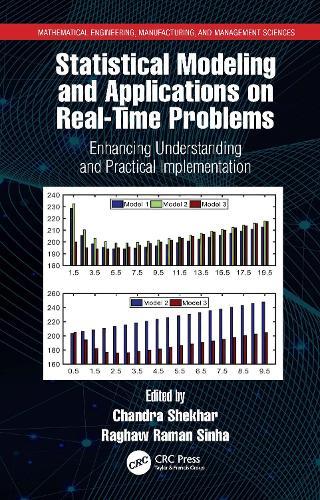
Statistical Modeling and Applications...
Enhancing Understanding and Practical...
Paperback
$178.95 $143.48
Forthcoming
You can preorder this
Galbraith's Construction and Land...
Paperback
$146.95 $117.30
Forthcoming
You can preorder this