PRIZES to win! PROMOTIONS


Jairo I. Fúnez-Flores is an Assistant Professor of Curriculum Studies at Texas Tech University. He is the Program Chair of the Decolonial, Postcolonial, and Anti-Colonial Studies in Education SIG for the American Educational Research Association. His research is situated at the intersection of sociocultural studies in curriculum theory, decolonial theory, critical ethnography, and social movement research. Currently, he is advancing what he calls insurgent decolonial theory to situate thought in sites of struggle. He has published articles in Theory, Culture & Society, Globalisation, Societies and Education, Sociology Compass, and Educational Studies. He is also the co-editor of the Bristol University Press book series Decolonization and Social Worlds, lead editor of the Routledge book series Decolonial Entanglements: Praxis, Pedagogy, and Social Theory, and lead editor of the SAGE Handbook of Decolonial Theory. Ana Carolina Díaz Beltrán is an Assistant Professor of Social Studies Education at the University of Texas Rio Grande Valley. Her research focuses on the living experiences of citizenship and belonging of transnational Latine youth, intergenerational schooling experiences of Black families in the US, and decolonial thought and praxis. She has published articles in Curriculum Inquiry, Theory & Research in Social Education, and Educational Studies. She currently serves as chair for the Decolonial, Postcolonial and Anti-colonial Studies in Education SIG at the American Educational Research Association. Sabelo J. Ndlovu-Gatsheni is currently Research Professor and Director of Scholarship at the Department of Leadership and Transformation (DLT) in the Principal and Vice-Chancellor’s Office at the University of South Africa (UNISA). Professor Ndlovu-Gatsheni has published over a hundred publications and his major book publications include Empire, Global Coloniality and African Subjectivity (New York & Oxford: Berghahn Books, June 2013); Coloniality of Power in Postcolonial Africa: Myths of Decolonization (Dakar: CODESRIA, 2013); Decolonizing the University, Knowledge Systems and Disciplines (North Carolina, Carolina Academic Press, April 2016) co-edited with Siphamandla Zondi; The Decolonial Mandela: Peace, Justice and Politics of Life (New York and Oxford: Berghahn Books, March 2016); and Epistemic Freedom in Africa: Deprovincialization and Decolonization (London & New York: Routledge, July 2018). His latest publication is Decolonization, Development and Knowledge in Africa: Turning Over A New Leaf (Routledge, May 2020). Sandeep Bakshi (Université Paris Cité, ECHELLES UMR 8264) researches on transnational queer and decolonial enunciation of knowledges. He received his PhD from the School of English, University of Leicester, UK, and is currently employed as an Associate Professor of Decolonial, Postcolonial and Queer Studies at University Paris Cité. He convened two research seminars, “Peripheral Knowledges” and “Empires, Souths, Sexualities,” (2019-2024) and currently co-convenes the research seminar, “Undiscipline, Decolonise, Repair”. He leads the Pôle Société Civile of the Cité du Genre Institute, Université Paris Cité. Co-editor of Decolonizing Sexualities: Transnational Perspectives, Critical Interventions (Oxford: Counterpress, 2016), ‘Decolonial Trajectories’, special issue of Interventions (2020), and Qu’est-ce que l’Intersectionnalité? Dominations plurielles : sexe, classe et race (2021), he has published on queer and race problematics in postcolonial literatures and cultures. He is the co-founder and co-director of the Decolonizing Sexualities Network (https://decolonizingsexualities.org) Agustin Lao-Montes has a Ph.D. in Sociology from the State University of New York–Binghamton. He is a Professor of Sociology & Afro-American Studies at UMass Amherst. His fields of specialty include world-historical sociology and globalization, political sociology (especially social movements and the sociology of state and nationalism), social identities and social inequalities, sociology of race and ethnicity, urban sociology/community-university partnerships, African Diaspora and Latino Studies, sociology of culture and cultural studies, and contemporary theory and postcolonial critique. He has published numerous articles on decolonial theory and is the author of Mambo Montage: The Latinization of New York and Contrapunteos diaspóricos: Cartografías políticas de Nuestra Afroamérica. Flavia Rios is a Professor of Sociology at the Universidade Federal Fluminense (UFF), Brazil. She was a Visiting Student Researcher Collaborator (VSRC) in the Department of Sociology at Princeton University (2013). Her main interests are Social Movements, racial inequalities, Affirmative Actions, and Black thought. Flavia’s current research focuses on intersections between gender, race, and democracy. She is the author of numerous articles building upon Black decolonial feminisms and struggles in Brazil.
The Sage Handbook of Decolonial Theory is a vital and urgent contribution to the ongoing struggles for liberation across the Global South and beyond. This volume resists the erasure of politically grounded knowledge and affirms the epistemic centrality of Indigenous, Black, Latinx, and Palestinian thought and praxis in the fight against racial capitalism, settler colonialism, and heteropatriarchy. As the Palestinian Feminist Collective, we recognize this work as part of a larger struggle to dismantle the structures that sustain oppression and dispossession. We celebrate this Handbook for its commitment to inter-epistemic dialogue, its refusal to accommodate colonial knowledge production, and its insistence on theory as action—rooted in the lived realities of those resisting empire. Everyone engaged in academic organizing must read this book; it is an essential resource for scholars and activists committed to decolonial thought and practice. -- The Palestinian Feminist Collective This brilliantly conceptualized collection brings together a plurality of differently situated decolonial theories, analyses, empirics, and material practices, around the axes of the coloniality of power, of knowledge, of being, and of gender. It vastly opens up current discussions about relations of power, discourse, material conditions, and the many kinds and dimensions of political resistance, in important new ways. This astonishing transdisciplinary book will become a classic, indeed required reading, for the field. -- Paola Bacchetta
The Nature and Origins of Mass Opinion...
Paperback
$54.95
Not in-store but you can order this
Platforms, Power, and Politics
An Introduction to Political Communication...
Paperback
$39.95
In Stock 😊
Forms of Capital
General Sociology, Volume 3: Lectures...
Paperback
$39.95
Not in-store but you can order this
Holy Rebellion
Religious Feminism and the Transformation...
Paperback
$65.95
Not in-store but you can order this
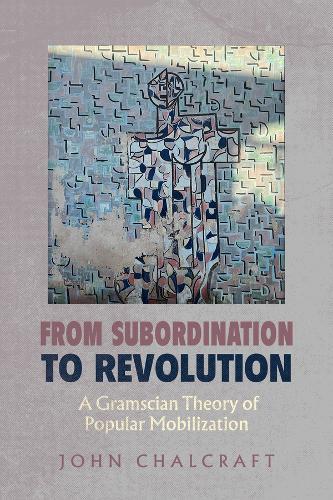
From Subordination to Revolution...
A Gramscian Theory of Popular Mobilization...
Paperback
$49.95
Not in-store but you can order this
Afropea
A Post-Western and Post-Racist Utopia...
Hardback
$41.95
Not in-store but you can order this