Beat the rise! Delivery fees are going up soon. INFO


JosZ Alvarez, professor of food and resource economics at the University of Florida's Everglades Research and Education Center, Belle Glade, is a recognized expert on Cuba's agricultural issues and on the sugar agroindustry. Jorge F. PZrez-L-pez, an international economist, has conducted research and written on many aspects of the Cuban economy, including national income accounting, energy issues, and foreign trade and investment.
For centuries sugar was the engine of the Cuban economy, but in 2002 the industry was cut down to half its size, thus ending its predominance. This superb collection of essays written by internationally known experts in several relevant topics, and skillfully edited and integrated, provides the best analysis available of the demise of Cuba's sugar industry. Furthermore, the authors study in depth the 'reinvention' of the industry in probable future moves to the market and democracy. It should be read by all those interested in Cuba, sugar, and Latin America. -- Carmelo Mesa-Lago Despite the collapse of the Cuban sugar industry in the 1990s, it is difficult to think about the economic future of the island without factoring in the once-dominant sugar industry. In Reinventing the Cuban Sugar Agroindustry, the editors have brought together a blue-ribbon group of international experts who analyze the condition of the industry and potential avenues for its future growth taking into consideration a very complex international economic environment. This volume is essential to understanding the current woes of the Cuban industry and some of its alternatives under a market-oriented system. -- Sergio Diaz-Briquets Seventeen papers consider the background, transition, and potential future paths of Cuba's sugar agroindustry. Journal Of Economic Literature Sugar is a permanent part of Cuba's culture, geography, and economy, but massive production, Soviet subsidies, and U.S. quotas are things of the past. In this comprehensive volume, Jorge Perez-Lopez and Jose Alvarez help us understand sugar's roots in Cuba, its current restructuring, and the options for a downsized, economically viable industry that will carry into the 21st century. A real gift to students of Cuba's economy, and to those who ponder its future. -- Philip Peters
Counter-Cola
A Multinational History of the Global...
Paperback
$66.95 $56.92
Not in-store but you can order this
Ending Hunger
The quest to feed the world without...
Paperback
$29.99
Not in-store but you can order this
Food Politics
How the Food Industry Influences...
Paperback
$49.95
Not in-store but you can order this
The Uncertainty Mindset
Innovation Insights from the Frontiers...
Paperback
$49.95
Not in-store but you can order this
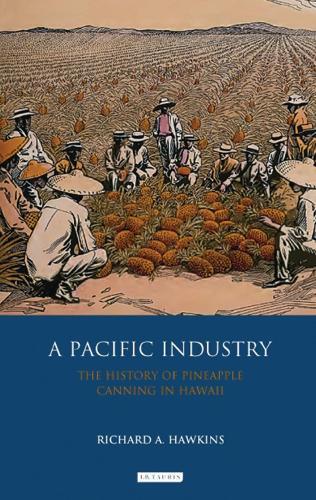
A Pacific Industry
The History of Pineapple Canning...
Paperback
$69.99
Not in-store but you can order this
Artificial Intelligence Applications...
Hardback
$601.95 $481.77
Not in-store but you can order this