Bargains! PROMOTIONS


Dr. Javed Iqbal earned his Ph.D. in Plant Biochemistry and Molecular Biology from Quaid-i-Azam University, Islamabad, Pakistan. He is currently serving as an Assistant Professor (TTS) in the Department of Botany at Bacha Khan University, Charsadda, Pakistan. A double gold medalist and HEC-approved supervisor, Dr. Iqbal has made significant academic contributions in the fields of green nanotechnology, plant biochemistry, and medicinal plant-based bioassays. His research focuses on the green synthesis of metal oxide nanoparticles and their biological applications. He completed a six-month research fellowship at the University of California, Los Angeles, and has published over 30 research articles in reputed international journals. He is an active reviewer for numerous SCI-indexed journals and participates in academic leadership roles within his department. Dr. Muhammad Anas is a plant physiologist specializing in abiotic stress biology, nanotechnology-based interventions, and multi-omics approaches in crop plants. He earned his PhD in Plant Sciences from Quaid-i-Azam University, Islamabad, where his research focused on mitigating heavy-metal toxicity in bread wheat through biogenic quantum dots and nano-enabled physiological, ionomic, and antioxidant regulation. He completed a TÜBİTAK–TWAS Research Fellowship at Selçuk University, Türkiye, working on miRNAomics of wheat under cadmium and chromium stress using small-RNA sequencing and bioinformatics. Dr. Anas has authored more than 40 Scopus-indexed peer-reviewed research articles and over 30 scholarly book chapters with leading international publishers. He has also served as a visiting lecturer and teaching assistant at Quaid-i-Azam University, with academic work focused on strengthening crop resilience and sustainable agricultural systems. Dr. Ayush Madan earned his Ph.D. in Biotechnology from Shobhit University, India. He is currently affiliated as an Assistant Professor at Department of Biotechnology, People's University, Bhopal, India. Previously, He worked as a Graduate Research Assistant at Universiti Malaysia Terengganu, Malaysia, where he contributes to projects on nanotechnology-driven bioremediation and sustainable agriculture. He completed his M.Tech. in Biotechnology from Graphic Era University, India. Dr. Madan’s academic background includes research at Biocon Research Limited and ONGC, with expertise in microbiology, bioinformatics, and nanobiotechnology. He has published several book chapters with prominent international publishers, focusing on topics such as environmental sustainability, cancer immunotherapy, and AI-driven recycling technologies. His research emphasizes the intersection of biotechnology and environmental health. Dr. Ghulam Murtaza received his Ph.D. in Environmental Science and is currently a researcher at the School of Ecology and Environmental Sciences, Yunnan University, China. His research centers on the application of modified and aged biochars for environmental remediation, particularly for pollutant removal in soil and water systems. Dr. Murtaza has authored numerous peer-reviewed articles in journals such as Scientific Reports, Chemosphere, and BMC Plant Biology. His academic work has contributed to advancing sustainable solutions in agriculture and environmental management. With a focus on biochar-soil-plant interactions, he plays an active role in promoting ecological resilience and soil restoration through innovative biotechnological approaches.
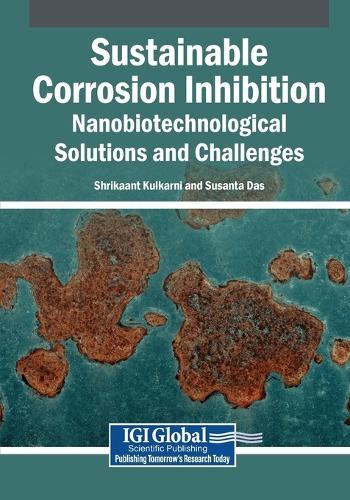
Sustainable Corrosion Inhibition...
Nanobiotechnological Solutions and...
Paperback
$417.95 $334.56
Not in-store but you can order this
Nanomaterials for Advanced Technologies...
Hardback
$320.95
Not in-store but you can order this
Harnessing Nanozymes to Combat Antimicrobial...
Hardback
$490.95 $392.41
Not in-store but you can order this
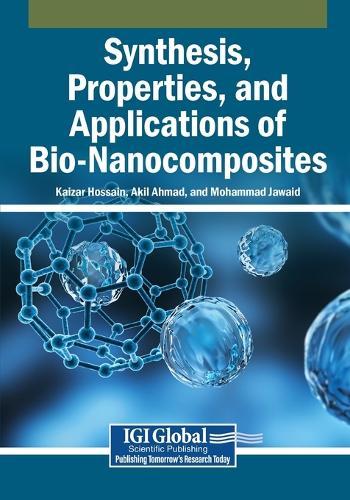
Synthesis, Properties, and Applications...
Paperback
$470.95 $376.42
Not in-store but you can order this
Leveraging AI and Nanotechnology...
Paperback
$519.95 $416.03
Not in-store but you can order this
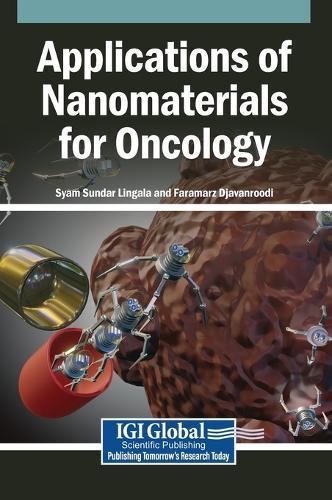
Applications of Nanomaterials for...
Hardback
$487.95 $389.99
Not in-store but you can order this