Bargains! PROMOTIONS


Prof. Dr. Acad. Ashok Vaseashta received a Ph.D. from the Virginia Polytechnic Institute and State University, Blacksburg, VA, in 1990, followed by Kobe’s post-doctoral fellowship. He was awarded an Honoris Causa doctorate from Riga Technical University, Honorary membership of the Academy of Sciences of Moldova, and a Gold Medal for his leadership in Nanotechnology from the National Polytechnic University of Armenia. Currently, he is Executive Director for strategic research with the International Clean Water Institute in Virginia, USA. He served as a Professor at Virginia Tech and Marshall University, Director of Research at the Institute for Advanced Sciences Convergence and International Clean Water Institute for Norwich University Applied Research Institutes, Vice-Provost (Rector) for Research in South Carolina, and Executive Director and Chair of the Institutional Review Board at a State University in New Jersey. He held visiting positions as a Professor at the Riga Technical University, Latvia, 3 Nano-SAE Research Centre, University of Bucharest, Romania, Transilvania University of Brasov, Romania; member of CIRET, France, and a scientist at the Weizmann Institute of Science, Israel. He served the U.S. Department of State in two rotations as a strategic S&T advisor in the Bureau of International Security and Nonproliferation (ISN), Office of Weapons of Mass Destruction and Terrorism. He served as NATO project director (NPD) for 7 activities funded under NATO’s Science for Peace and Security program. Inspired by nature and guided by societal necessities, he strives for technological innovations to address the global challenges of the 21st century. He specializes in dual-use research to identify embedded hybrid threats, using research tools such as foresight, heuristics, artificial intelligence, and complexity science. His research interests include chem.-bio sensors, nanotechnology, environmental/ecotoxicology science, critical infrastructure protection, and the environmental impact of micro/nano plastics - all using the nexus of advanced technological solution platforms. He is a Fulbright Specialist and serves as a research fellow at the Center for Disruptive Technologies and Future Warfare in the Institute for National Strategic Studies at the National Defense University. He is the author/editor of 27 books and has published over 350 articles in scientific journals, book chapters, and conferences. He serves on the editorial boards of several international journals and is an active member of various professional organizations. Prof. Dr. Ioan Stamatin is a Professor of Physics at the University of Bucharest, where he earned his doctorate in 1998. He is a supervisor in the Doctoral School of Physics, specializing in Renewable and Alternative Energy Sources. He is also the coordinator of the 3nano-SAE Research Center (Nanosciences & Alternative Energy Sources) and founder of the Fuel Cells & Hydrogen Storage branch of the University of Bucharest's Postdoctoral School. Recently in 2024, as a fervent supporter, he implemented the new idea by starting “innoversity” – a concept based on AI & IoT. Prof. Stamatin's research interests span a wide range of topics, including Energy: Fuel cells, hydrogen storage, sodium-ion batteries, heat storage nanomaterials, and radioisotope thermal generator applications. Nanomaterials: Synthesis, characterization, and applications of nanomaterials in electrocatalysis, photocatalysis, CO2 reduction, and enhancing plant pest resistance. Biotechnology: Microbial fuel cells, microorganism-based metal recovery, and algal biotechnologies. Agriculture: Nanopesticides for seed revitalization, green permaculture, and electroculture. He has authored numerous publications, including books, book chapters, and articles in high-impact journals. His work has led to over 20 national patents. Prof. Stamatin is a recognized expert evaluator in EU research programs and a member of Romanian standard associations (MRS, E-MRS). He has supervised numerous doctoral theses for both Romanian and international students, contributing to the development of highly skilled researchers worldwide. Some of the key highlights include his extensive experience in renewable energy and nanomaterials research; proven track record of securing patents and publishing in reputable journals; dedication to fostering research excellence and mentoring future generations of scientists; and an active contributor to national and international research communities
IMIRAGEmagazine Issue
#2574: IMIRAGEmagazine
Paperback
$59.95 $51.33
Not in-store but you can order this
Schwarze Frauen Malbuch für Erwachsene...
40 Einzigartige Illustrationen
Paperback
$31.95 $28.76
Not in-store but you can order this
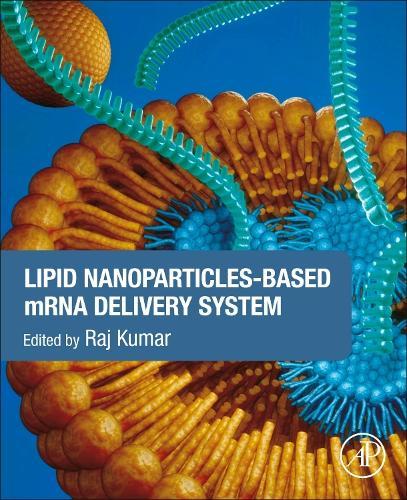
Lipid Nanoparticles-Based mRNA Delivery...
Paperback
$362.95
Not in-store but you can order this
The William E. Boeing Story
A Gift of Flight
Hardback
$74.99
Not in-store but you can order this
IMIRAGEmagazine Issue
#2624: Imirage Magazine
Paperback
$112.95 $90.11
Not in-store but you can order this