Bargains! PROMOTIONS


William Righter, educated at Harvard and Oxford, has taught English Literature and Moral Philosophy in England and America. He, at the time of the first publication of this book, was with Kings College, Cambridge.
Review of the original publication: “The book is in two sections, the first dealing with the problem of judgement, the second with that of exactness and logicality in criticism. In both a considerable amount of space is devoted to discussion of examples from actual critics. Mr. Righter hopes in this way to avoid empty philosophical speculation, divorced as it has often been from the empirical work in the field. He states for example (p. vii) that his is ‘not an attempt to develop a theory of judgement on logical or metaphysical grounds, but rather to set the problem of judgement in its proper context of the things critics say.’ The programme sounds a good one; the problems are real, and the reader is excited at the prospect of the application to them of the sustained and rigorous argument, the precise and careful distinctions, which he expects of a modern philosopher.” -J. M. ELLIS, Analytic Philosophy, Volume5, Issue1, January 1964, Pages 17-19
Games for Your Mind
The History and Future of Logic...
Hardback
$49.99
Not in-store but you can order this
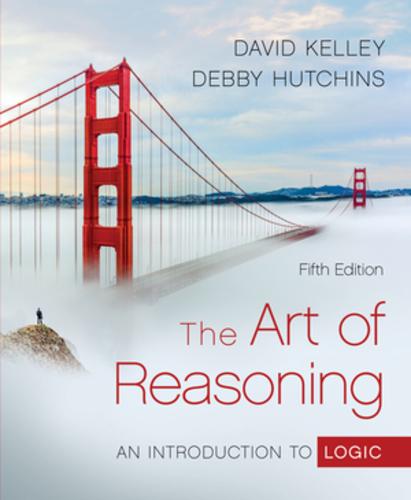
The Art of Reasoning
An Introduction to Logic
Mixed media product
$191.95
Not in-store but you can order this
An Introduction to Critical Thinking...
Think More, Think Better
Paperback
$140.95
Not in-store but you can order this
The Art of Always Being Right
The 38 Ways to Win an Argument
Paperback
$29.99
Not in-store but you can order this