Bargains! PROMOTIONS


Amna Javed is Senior Lecturer at the Graduate School of Knowledge Science, Japan Advanced Institute of Science and Technology (JAIST), Japan. Her research lies at the intersection of knowledge and service science, innovation, and transformative knowledge management. She has authored scholarly books and published widely in leading Scopus-indexed journals and international conferences. Dr. Javed serves on editorial boards and international scientific committees and is a recipient of several competitive research awards and project grants. Her current research focuses on value creation, service design, education science, Islamic banking and finance, and knowledge management. Firdous Ahmad Malik is Assistant Professor of Economics at the University of the People and a Post-Doctoral Fellow at Amity University, Dubai. He holds a PhD and MPhil in Economics from Babasaheb Bhimrao Ambedkar University and a Master’s from the University of Kashmir. His research specializes in financial inclusion, microfinance, development economics, and public finance. Dr. Malik has published multiple books and over 30 peer-reviewed articles with top academic publishers like Springer Nature and Routledge. He is the Founding President of the Jammu and Kashmir Economic Association and serves as Editor-in-Chief of Social Science & Humanities International. Recognized globally, he actively mentors young scholars and has received awards for research excellence and peer review. Hebatallah Adam is a distinguished scholar, academic leader, and editor with more than two decades of expertise in International Economic Development. She is currently Professor of Economics at the School of Business, Horizon University College, UAE. Previously, she served as Professor of Economics and Associate Dean for Academic Affairs (Master’s Programme) at the Jindal School of International Affairs, O.P. Jindal Global University, India. In recognition of her academic contributions, she is a recipient of the UAE’s 10-year Golden Residence Visa (Geniuses of Talent). Dr. Adam has also held academic appointments at Ain Shams University, the German University in Cairo, Badr University, and the Arab Academy for Science, Technology, and Maritime Transport. She is the founder of the Jindal Centre for the Global South, the Global South Research Foundation (GSRF), and the Africa Dialogue Forum (ADF), each advancing research, policy, and cross-sector collaboration on development and cooperation within the Global South. Her academic credentials include a B.A., M.A., and Ph.D. from Ain Shams University (Egypt), Poitiers University, and Sorbonne University (France). Her research focuses on poverty alleviation, green economics, fintech, and political economy, with publications such as Polycrisis and Economic Development in the Global South (2024) and Political Economy of Development in the Global South Post-COVID-19 (2023). A member of the Organization for Women in Science for the Developing World (OWSD) and the African Studies Centre at Leiden, she actively contributes to global research, editorial boards, and international forums, championing equitable development in the Global South.
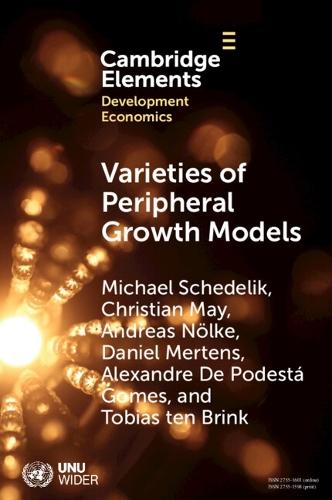
Varieties of Peripheral Growth Models...
Towards a New Comparative Political...
Paperback
$60.95 $51.51
Not in-store but you can order this
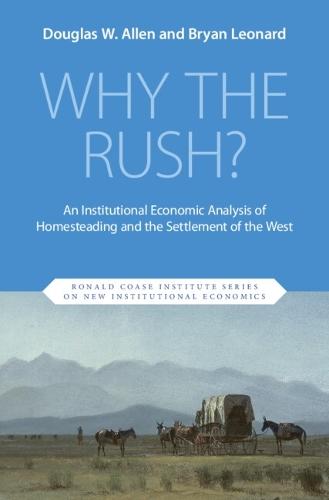
Why the Rush?
An Institutional Economic Analysis...
Hardback
$327.95 $262.34
Not in-store but you can order this
Neither Civil Nor Servant
Singapore's Disruptive Economic...
Hardback
$91.95 $78.06
Not in-store but you can order this
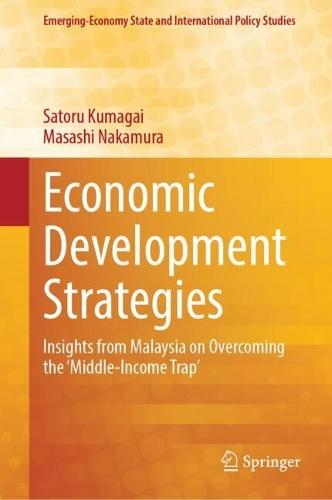
Economic Development Strategies...
Insights from Malaysia on Overcoming...
Hardback
$326.95 $261.21
Not in-store but you can order this