Beat the rise! Delivery fees are going up soon. INFO


Jorge E. Rivera is an Associate Professor of Strategic Management and Public Policy at George Washington University School of Business. His research focuses on the relationship between public policy and business strategies. He has published more than 30 manuscripts and his work received Best Paper Awards from the Academy of Management's Organizations and Natural Environment Division in 2001 and the Policy Sciences Society in 2003. His journal articles have also been mentioned in more than 30 news stories by national and international newspapers including the New York Times and the Los Angeles Times. In 2010 one of his publications, co-authored with Peter deLeon, examining the voluntary environmental behavior of the US ski industry, was ranked as the most cited manuscript published in the Policy Studies Journal between 2004 and 2009. He is also the author of Voluntary Environmental Programs: A Policy Perspective (co-edited with Peter deLeon) by Lexington Press. In 2009, Professor Rivera was appointed as an Associate Editor of the journals Policy Sciences and Business and Society. He is also Chair-elect of the Organizations and the Natural Environment Division of the Academy of Management.
Review of the hardback: 'Jorge Rivera offers an ambitious and welcome contribution to the literature on corporate environmentalism. Where most academic work in this area focuses on industrialized nations, Rivera's book shifts the lens towards the developing world. He provides careful analysis with both breadth - how variations in specific country characteristics moderate corporate response to public policies - and depth - how firm level characteristics vary the type of response. Further, he blends theoretically grounded analysis in institutional theory and policy science with careful empirical analysis of voluntary corporate programs in the US and Costa Rica. The result is a thorough and rigorous piece of work that should be of interest to scholars in this rapidly growing domain of study.' Andrew J. Hoffman, Holcim (US) Professor of Sustainable Enterprise, University of Michigan Review of the hardback: 'For anyone interested in understanding the dynamics of how and why firms the world over have softened their opposition to environmental regulatory demands and adopted more conciliatory stands, this book is a must. It is not just about how businesses participate in the public policy process. It is about how they have internalized public policy and other pressures to upgrade their environmental performance. It provides rigorous theoretical and empirical answers to important questions such as: which firms are the better environmental performers; what drives their environmental performance; and does their environmental performance yield benefits to these companies.' Alfred Marcus, Edson Spencer Professor of Strategy and Technological Leadership, University of Minnesota Jorge Rivera offers an ambitious and welcome contribution to the literature on corporate environmentalism. Where most academic work in this area focuses on industrialized nations, Rivera's book shifts the lens towards the developing world. He provides careful analysis with both breadth - how variations in specific country characteristics moderate corporate response to public policies - and depth - how firm level characteristics vary the type of response. Further, he blends theoretically grounded analysis in institutional theory and policy science with careful empirical analysis of voluntary corporate programs in the US and Costa Rica. The result is a thorough and rigorous piece of work that should be of interest to scholars in this rapidly growing domain of study. Andrew J. Hoffman, Holcim (US) Professor of Sustainable Enterprise, The University of Michigan For anyone interested in understanding the dynamics of how and why firms the world over have softened their opposition to environmental regulatory demands and adopted more conciliatory stands, this book is a must. It is not just about how businesses participate in the public policy process. It is about how they have internalized public policy and other pressures to upgrade their environmental performance. It provides rigorous theoretical and empirical answers to important questions such as: which firms are the better environmental performers; what drives their environmental performance; and does their environmental performance yield benefits to these companies. Alfred Marcus, Edson Spencer Professor of Strategy and Technological Leadership, Carlson School of Management and the Technological Leadership Institute, University of Minnesota What I liked about the book is that Rivera offers a comprehensive look at firm participation in government policy programs. The interface between government and business is still relatively new, so this breadth of coverage is welcome.... This book is a must-read for any researcher embarking on a new research program and trying to develop a set of explanatory or control variables. Kudos goes to Rivera for embarking on a relatively tight research program and bundling it into a one-stop shop book. Pratima Bansal, Richard Ivey School of Business, University of Western Ontario, Administrative Science Quarterly Rivera offers a more nuanced way of thinking about how businesses in different country settings participate in the policy process to enhance their sustainability. He also offers a deeper understanding of how the political setting can shape social and environmental program designs, and thus program outcomes. This type of research is long overdue, and is an important contribution to our knowledge about how private strategies and public policies interact to advance the cause of sustainability. Nicole Darnall, Arizona State University, Policy Studies Journal
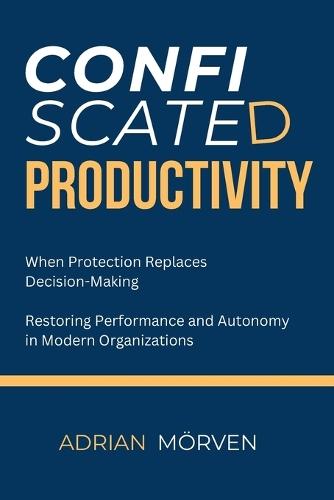
Confiscated Productivity
When Protection replaces Decison...
Paperback
$45.95
Not in-store but you can order this
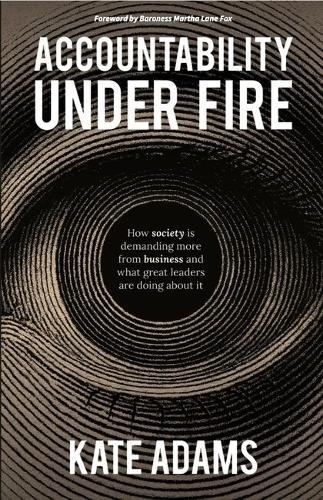
Accountability Under Fire
How society is demanding more from...
Paperback
$39.95 $34.26
Not in-store but you can order this
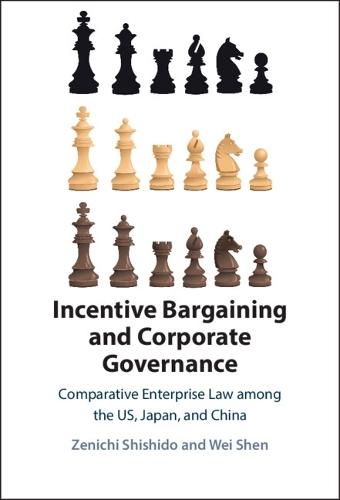
Incentive Bargaining and Corporate...
Comparative Enterprise Law among...
Hardback
$376.95 $301.70
Not in-store but you can order this