PRIZES to win! PROMOTIONS


Zenichi Shishido is Professor of Law at Musashino University, Tokyo, Professor Emeritus at Hitotsubashi University, Tokyo, and has been a Visiting Professor at Harvard University, Columbia University, Duke University and the University of California, Berkeley. Wei Shen is KoGuan Distinguished Professor of Law at Shanghai Jiao Tong University KoGuan School of Law, and has been a visiting professor at New York University School of Law, Michigan Law School, University of Pennsylvania Carey Law School, National University of Singapore Faculty of Law, among others.
‘Shishido and Shen deploy a powerful game-theoretic lens to make sense of the way that the stakeholders of firms in the United States, Japan, and China navigate radically different legal systems. This synoptic account of how managers, employees, creditors, shareholders, and governments interact across these three jurisdictions provides insight into enterprise law everywhere.’ Douglas Baird, Harry A. Bigelow Distinguished Service Professor of Law, University of Chicago ‘Professors Shishido and Shen present an exciting new model of corporate governance based on incentive bargaining among management, labor, capital and government in a dynamic repeated game. They demonstrate the advantages of their model in their insightful analysis of corporate governance in three very successful but different regimes: the United States, Japan, and China. This book is a must read for any serious scholar or policy analyst regarding the impact of corporate governance laws, including employment, finance and bankruptcy laws, affecting enterprise actions.’ Kenneth G. Dau-Schmidt, Carr Professor of Labor and Employment Law, Indiana University Bloomington ‘Shishido and Shen’s Incentive Bargaining and Corporate Governance masterfully examines how the enterprise laws of the United States, Japan, and China—three of the world’s largest but structurally distinct economies—shape incentive bargaining between a firm’s employees, managers, and capital providers. By exploring corporate governance through the lens of incentive bargaining, the authors illuminate the distinct way in which this bargaining occurs in each country and its interaction with three different models of the state’s role in the firm, from the market-driven model of the U.S. to Japan’s stakeholder-oriented system to China’s party-state regime. What makes this book particularly compelling is how it seamlessly guides readers from familiar corporate governance frameworks to their less intuitive counterparts in other jurisdictions, offering a truly comparative perspective. This is no small feat—it is a testament to the deep expertise of the authors, who bring unparalleled insight into the corporate laws and business practices of all three legal systems. A must-read for scholars, policymakers, and practitioners seeking to understand today's global corporate landscape.’ Robert Bartlett, W. A. Franke Professor of Law and Business, Stanford Law School ‘This book aptly addresses a gap in the market for strong theoretical literature on corporate governance in the Asian context. This is an excellent comparative work providing highly topical and current discussions on Chinese and Japanese corporate governance.' Iris Chiu, Professor of Corporate Law and Financial Regulation, University College London
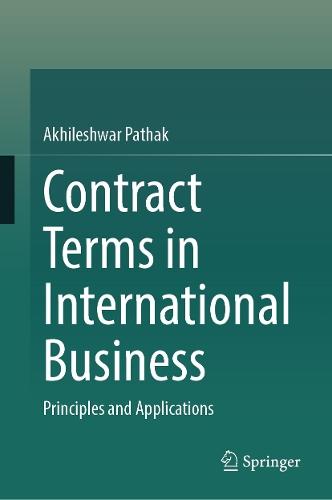
Contract Terms in International...
Principles and Applications
Hardback
$340.95 $273.14
Not in-store but you can order this
The Silver Way
China, Spanish America and the birth...
Paperback
$17.99
Not in-store but you can order this
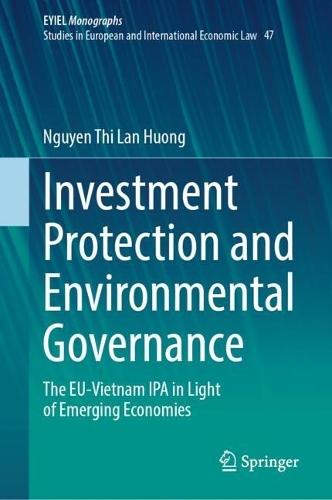
Investment Protection and Environmental...
The EU-Vietnam IPA in Light of Emerging...
Hardback
$385.95 $308.92
Not in-store but you can order this
Shaping the Future of the Fourth...
A guide to building a better world...
Paperback
$35
Not in-store but you can order this