Beat the rise! Delivery fees are going up soon.


Olfmi O. Tw is Associate Professor of Philosophy at Georgetown University and a fellow at the Climate and Community Institute. He is the author of the critically acclaimed book Elite Capture, a contributor to Greta Thunberg's The Climate Book, and a past recipient of a Marguerite Casey Freedom Scholar fellowship. Tw's public philosophy, including articles exploring intersections of climate justice and colonialism, has been featured in The Guardian, The New Yorker, The New Republic, The Nation, Boston Review, Dissent, Al Jazeera, Foreign Policy, Hammer & Hope (where he is a member of the Editorial Team). His writings have been translated into Brazilian Portuguese, French, German, Italian, and Korean, among other languages.
""Weaving together the long-held redistribution demands of revolutionary movements for racial justice and decolonization with the scientific imperative for immediate climate action, Ol�fẹ́mi O. T��w� builds the irresistible case for decarbonization through reparation. Coursing with moral urgency and propelled by brilliant prose, this is more than argument. It's how we build the power needed to win."" --Naomi Klein, author of Doppelganger "" Reconsidering Reparations is an essential book for anyone who wants a better world. Ol�fẹ́mi O. T��w�'s argument for reparations as a construction project is urgent in the times we are facing. T��w� makes clear the connections between colonialism and the climate crisis in a way that is both rigorously backed with research and extremely practical. This is a book I devoured the first time I read it and have revisited again and again since. Ol�fẹ́mi O. T��w�'s work is transformational."" --Mikaela Loach, author of It's Not That Radical ""In this sweeping, subtle, and sophisticated analysis, Ol�fẹ́mi O. T��w� presents an iron-clad case for why colonialism's end must coincide with a reparative transformation in relations between the colonizer and colonized, in the Global North and South. It's required reading for anyone looking for the arguments to support a just, and healing, future."" --Raj Patel ""This is the rare book of moral, economic, and political philosophy that has urgent, real-world stakes and implications. Ol�fẹ́mi O. T��w�'s incisive and visionary accounting reveals that meaningful reparations are less about tallying debts and credits and apportioning blame than forging new communities and building a more livable world. This insightful book can help us chart a path toward a democratic, decarbonized, and decolonized future we all need and deserve."" --Astra Taylor, author of Remake the World ""In this forcefully argued book, Ol�fẹ́mi O. T��w� grounds the case for reparations in a sweeping yet synthetic account of the historical origins of our starkly unequal world order. Weaving together multiple traditions of radical thought and attuned to the most pressing debates of our moment, T��w� reveals reparations to be world-making in two potent senses of the term."" --Thea Riofrancos ""Illuminating... Calling upon intellectual legacies far beyond the analytic canon--from anticolonial activists to the Black radical tradition to legal scholarship to lessons from the nineteenth-century Mal� slave rebellion in the Empire of Brazil--T��w� returns the discourse on reparations to its rightful, radical roots... His work is a particularly welcome salve to tired debates about race, class, and identity politics."" --Natasha Lennard, Bookforum ""Though Reconsidering Reparations focuses on histories of unequal distribution, its highlight is the climate justice chapters."" --Ankushi Mitra and Lahra Smith, Washington Post
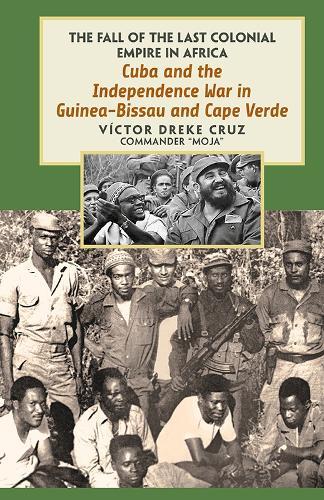
Cuba and the Independence War in...
The Fall of the Last Colonial Empire...
Paperback
$26.95
In Stock 😊