PRIZES to win! PROMOTIONS


After a British Academy Postdoctoral Fellowship at the University of Sheffield (2000-2003), Duncan Kelly took up a lectureship in politics at Sheffield until 2007. He then moved to what is now the Department of Politics and International Studies at the University of Cambridge, becoming a full Professor of Political Thought and Intellectual History in 2018, and then Professor of Politics in 2025. As well as writing on a wide range of topics in modern political thought and intellectual history for academic and general audiences, Kelly has edited the journal Modern Intellectual History since 2010.
Magisterial in its scope, elegant in its erudition, and full of surprising observations about the resonances of the Great War down to our own wartime impasses on a warming planet, Duncan Kelly offers a stunningly original intellectual history of the First World War as the furnace that forged the visions and liminal categories of modern political and economic thought to this day. What becomes visible is a dreamscape of imagined futures that are at once familiar and strange, haunting and sublime. * Stefan Eich, Georgetown University * What did the modernist moment mean for political thought? In Duncan Kelly's sweeping Worlds of Wartime, we finally have a full portrait of the Great War's convulsive impact on political and economic ideas. He shows how the radical dislocations of wartime provoked avant-garde experimentation not only in the arts and letters but also in the shape of states and markets. Ranging widely across Bolshevik revolution, anti-imperial futurisms, geopolitics, and ecological devastation, Kelly's magnificent achievement will become a touchstone for all those interested in power and philosophy in the twentieth century. * Natasha Wheatley, Princeton University * A book of extraordinary range, Worlds of Wartime is a thorough and utterly novel synthesis of the worlds and ideas of World War and its aftermath. Duncan Kelly succeeds in presenting the end of the war in all its instability, ranging from conceptions of the human body in modernist literature to the relationship between anticolonial thought and the political economy of the changing modern state. Worlds of Wartime is the most remarkable history of the Great War to appear in as long as I can remember-it forces us to rethink the war's place in modern history and the way it shocked and framed the decades that followed. * Stefanos Geroulanos, Director, Remarque Institute, New York University *
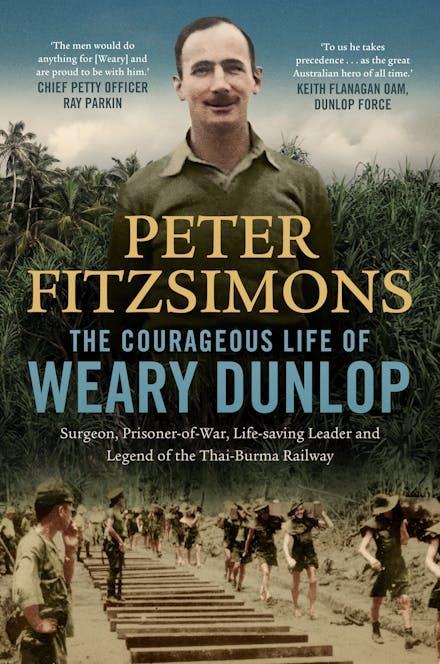
The Courageous Life of Weary Dunlop...
Surgeon, prisoner-of-war, life-saving...
Hardback
$49.99 $39.99
In Stock 😊