PRIZES to win! PROMOTIONS


MUMIA ABU-JAMAL is an award-winning journalist and author of two best-selling books, Live From Death Row and Death Blossoms, which address prison life from a critical and spiritual perspective. In 1981 he was elected president of the Association of Black Journalists (Philadelphia chapter). That same year he was arrested for allegedly killing a white police officer in Philadelphia. He was convicted and sentenced to death in 1982, in a process that has been described as an epic miscarriage of justice. After spending more than 28 years on death row, in 2011 his death sentence was vacated when the Supreme Court allowed to stand the decisions of four federal judges who had earlier declared his death sentence unconstitutional. He is now serving a life sentence without the possibility of parole. In spite of his three-decade-long imprisonment, most of which was spent in solitary confinement on Death Row, Abu-Jamal has relentlessly fought for his freedom and for his profession. From prison he has written seven books and thousands of radio commentaries. He holds a BA from Goddard College and an MA from California State University, Dominguez Hills. His books have sold more than 100,000 copies and have been translated into seven languages. JOHANNA FERNNDEZ is a former Fulbright Scholar to Jordan and Assistant Professor of History at Baruch College of the City University of New York where she teaches 20th Century US history and African American History. She is author of the forthcoming When the World Was Their Stage: A History of the Young Lords Party, 19681976 (Princeton University Press). Fernandez is the writer and producer of the film, Justice on Trial: the Case of Mumia Abu-Jamal and she is featured in the critically acclaimed documentary about Mumia Abu-Jamal, Long Distance Revolutionary. Her writings have been published internationally, from Al Jazeera to the Huffington Post. She gives interviews often and has appeared in a diverse range of print, radio, online and televised media including Democracy Now! with Amy Goodman, the Fox News shows Hannity and Megyn Kelley, Al Jazeera and The New York Times. She is a coordinator of the Campaign to Bring Mumia Home. CORNEL WEST is a scholar, philosopher, activist and author of over a dozen books including his bestseller, Race Matters. He appears frequently in the media, and has appeared on the Bill Maher Show, Colbert Report, CNN and C-Span as well as on Tavis Smiley's PBS TV Show.
When you listen to Mumia Abu-Jamal you hear the echoes of David Walker, Frederick Douglass, W.E.B. Du Bois, Paul Robeson, and the sisters and brothers who kept the faith with struggle, who kept the faith with resistance. --Manning Marable Mumia Abu-Jamal is one of the most important public intellectuals of our time ... He offers us new ways of thinking about law, democracy and power. He allows us to reflect up on the fact that transformational possibilities often emerge where we least expect them. --Angela Y. Davis Writing on the Wall, edited by Johanna Fernandez with an electrifying foreword by Cornel West ... is destined to become another classic tome in the canon of Prison Literature. --Noelle Hanrahan Abu-Jamal's writing tends to be forceful, outraged, and humorous, but he also engages in the bombastic approaches of another era. Early columns focus on his admiration for the cultish radical group MOVE, notoriously bombed by Philadelphia authorities in 1985 following years of conflict between police and blacks. From his captive perspective, the author offers powerful columns on diverse subjects ranging from the plight of black farmers to the crushing of dissent after 9/11. Some remain all too relevant--e.g., those decrying systemic police brutality as seen in flashpoints from Rodney King to Ferguson or the rise of racial disparities in drug sentencing. Abu-Jamal meditates on central figures in the black political narrative, ranging from Dr. Martin Luther King Jr. to Trayvon Martin. Yet some columns indulge in radical-left gamesmanship, as when he dismisses the salutary effects of the landmark Brown v. Board of Education ruling: 'Let the bourgeoisie and the Black middle class celebrate Brown. Meanwhile, let the rest of us ignore it.' As a collection that spans from 1982 to 2014, these topical essays testify to the effects of incarceration on mind and spirit. While his prose has sharpened over time, Abu-Jamal remains enraged and pessimistic about an America that, in his view, remains wholly corrupt: '[Blacks] know from bitter experience that while Americans may say one thing, they mean something quite different.' --Kirkus Reviews Hope and the seeds of revolution can come from the depths of isolation. Writing from his cell on death row, where he was held in solitary confinement for nearly 30 years, Abu-Jamal has long been a loud and clear voice for all who suffer injustice, racism, and poverty. Edited by Fernandez, this selection of 100 previously unpublished essays includes a foreword by Cornel West. --Evan Karp, SF Weekly Mumia knows what is happening better from behind bars than do many on the outside, because he has access to books ... Those of us outside of prison have access to books, too, although many seem to forget it. We could all be as well-informed as Mumia. We could all know what's coming next before it hits us in the face. A good place to start would be by reading the Writing on the Wall. --David Swanson, Counterpunch Abu-Jamal's commentaries, taken together, target the contradictions of the established order, pointing to its corrupt nature versus the natural power of people-fueled resistance ... It remains to be seen in a 2015 world of social media if the masses of 'Black Lives Matter' tweeters will develop the skill, discipline and commitment of their now-elder statesman Abu-Jamal, who wrote in the margins of the society decades before it became cool. --Todd S. Burroughs, Drums in the Global Village A comprehensive anthology of Mumia's short prison commentaries from 1982 to the present, which among other things tracks the ignominious history of police sponsored terror from Haitian immigrant Amadou Diallo (whose body NYPD riddled with of 40 bullets) to 92-year-old elderly Kathryn Johnston, shot to death in her Atlanta home by narcotics officers to 12-year-old Tammir Rice to Eric Garner to Freddie Gray and on and on ... --Robert Birnbaum It's not every prisoner, political or otherwise, who has the endurance and temerity, nor the call to testify like Abu-Jamal, from researching the miscarriage of justice in his own case to becoming a self-proclaimed jailhouse lawyer; few have streets in France named for them or public support from figures diverse as Cornel West, Amy Goodman, Alice Walker, Noam Chomsky, Tariq Ali, and Eddie Vedder. It's safe to say, though consigned to prison for life, Abu-Jamal will not be forgotten now or any time soon: His collected prison writings will be appreciated by human rights activists for ages to come, but more importantly they are useful right now, for anyone seeking a light in the darkness of the American night. --Denise Sullivan, Down with Tyranny! Given the United States' present position at the epicenter of inhumanity, it's not surprising that Mumia's overarching focus would be the belly of the beast and its all-consuming system of racist capitalism. He's especially well-placed to comment on the prison industrial complex, having spent over 33 years in jail--most of that in solitary confinement on death row ... In a 2006 commentary, Mumia poses the question: 'Is it mere coincidence that the most notorious guard at Abu Ghraib worked right here, in the United States; here, in Pennsylvania; here, in SCI-Greene prison, for over six years before exporting his brand of 'corrections' to the poor slobs who met him in Iraq?' The answer: no, because 'the roots of Guantanamo, of Abu Ghraib, of Bagram Air Force Base, of U.S. secret torture chambers operating all around the world, are deep in American life, in its long war against Black life and liberation.' --Belen Fernandez, Warscapes The publication of Writing on the Wall underscores the failure of the Fraternal Organization of Police and corrupt politicians to silence Mumia Abu-Jamal. In the face of attempts to execute him, smother his voice behind steel walls, slander him in the news media, intimidate supporters, pass laws to try to keep him from speaking out, and most recently, kill him through highly intentional 'medical neglect,' Mumia simply refuses to shut up. Like many other political prisoners slated to die in their dungeons, he has what his captors will never have: spiritual strength, dignity, integrity, love for the people, a commitment to revolution--and the ability to read the handwriting on the wall. His message carries the insights of his own generation of Black revolutionaries combined with truths born in struggles in many parts of the world. The time is right. As emerging movements gain strength, vision, and breadth, Mumia finds, in this book a new channel for sharing his ideas with people eager to bring down walls. --Carolina Saldana, CounterCurrents.org
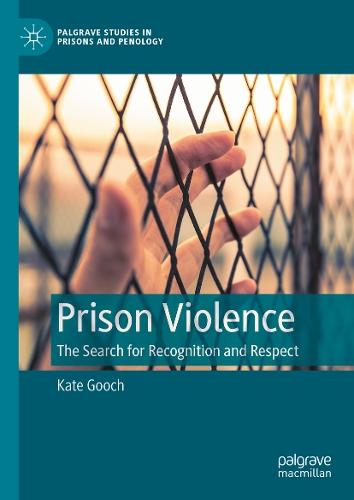
Prison Violence
The Search for Recognition and Respect...
Hardback
$221.95 $177.72
Not in-store but you can order this
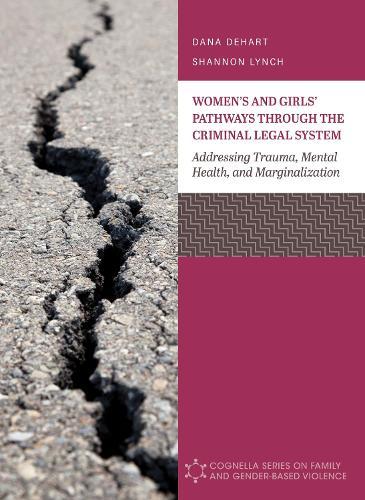
Women's and Girls' Pathways Through...
Addressing Trauma, Mental Health,...
Paperback
$156.95 $125.95
Not in-store but you can order this
Time After Time
Repeat Offenders – the Inside Stories,...
Hardback
$49.99
Not in-store but you can order this
Applied Theatre
Women and the Criminal Justice System...
Hardback
$180
Not in-store but you can order this
Making a Psychopath
My Journey into 7 Dangerous Minds...
Paperback
$36.99
Not in-store but you can order this