Beat the rise! Delivery fees are going up soon. INFO


Tahmineh Tayebi is a Senior Lecturer in Forensic Linguistics at Aston University, UK. Her research interests lie at the intersection of pragmatics, (im)politeness theory, corpus linguistics and forensic linguistics. She specialises in online offensive language, abuse and hate speech, with a particular focus on how language is used to cause harm and the broader legal and social implications of such communication. Vahid Parvaresh is an Associate Professor of Linguistics at Anglia Ruskin University, UK. His research focuses on language aggression, hate speech and impoliteness. His work is rooted in pragmatics, with a particular emphasis on how meaning is both shaped by and shapes what is said, alongside its social, moral and contextual foundations.
'What a pleasure to read a book that combines deft theoretical discussion with rigorous empirical work, and wraps it all up in prose that is a model of clarity! If you want to know about offensive language online (but with many reverberations well beyond that), this is compulsory reading.' Jonathan Culpeper, Professor of English Language and Linguistics, Lancaster University 'This book charts how we can reach a much more nuanced and empirically grounded understanding of offensive language, which has unfortunately become a defining feature of online digital life. Building on a multi-layered, corpus-based approach, Tayebi and Parvaresh draw out key patterns of offensive language, as well as demonstrating how it can arise in much more implicit and creative ways than has been appreciated to date. It is highly accessible and engaging – once I started reading it, I couldn't put it down!' Michael Haugh, Professor of Linguistics and Applied Linguistics, The University of Queensland
Like
A History of the World's Most Hated...
Board book
$59.99
Not in-store but you can order this
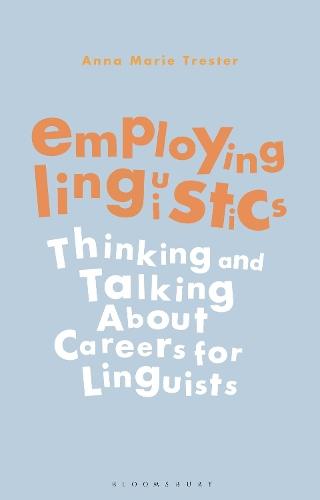
Employing Linguistics
Thinking and Talking About Careers...
Paperback
$46.99
Not in-store but you can order this
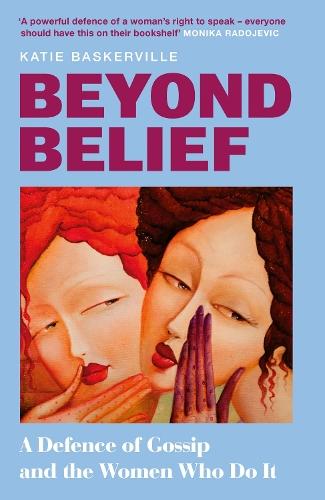
Beyond Belief
A Defence of Gossip and the Women...
Paperback
$36.99
Not in-store but you can order this
Critical Realism in Applied Linguistics...
Paperback
$106.95 $85.22
Not in-store but you can order this