Bargains! PROMOTIONS


John Kekes was for many years Professor of Philosophy and Public Policy at SUNY Albany, and is now Research Professor at Union College, Schenectady, New York. His latest books are Enjoyment (2008), The Human Condition (2010), Hard Questions (2019) all from Oxford University Press, and How Should We Live (2014) from Chicago University Press. He was Visiting Professor in Estonia, Singapore, Hungary, Canada, Portugal, and the United States Military Academy.
""In a deep and subtle examination of our condition, John Kekes shows how it is possible to live wisely, even when confronted with competing visions of what a good life might consist in. For Kekes, rather than assuming that there is one unitary Good over-riding all others, wisdom involves recognising our contingency while cultivating our moral imagination. This we can do by drawing on the historical and cultural traditions we inherit, as Kekes shows by a sensitive use of literature and philosophy. Kekes's achievement in his book is to intimate how each one of us, while sensitive to the demands of our own contingency and history, may transform the commonplace of our own lives, thus moving towards a form of wisdom worth striving for."" -- Anthony O'Hear, University of Buckingham
An Introduction to the Theory of...
Paperback
$101.95 $81.28
Not in-store but you can order this
I Believe, So I Am
Reflections on the Psychology of...
Paperback
$206.95 $165.58
Not in-store but you can order this
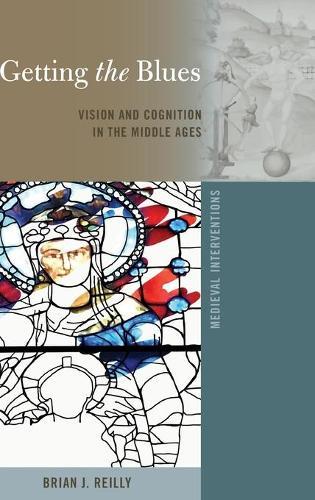
Getting the Blues
Vision and Cognition in the Middle...
Hardback
$143.95 $114.86
Not in-store but you can order this
Determinism and Self-Organization...
Paperback
$415.95 $332.78
Not in-store but you can order this
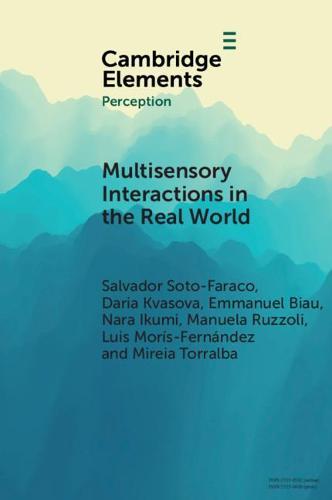
Multisensory Interactions in the...
Paperback
$58.95 $50.12
Not in-store but you can order this
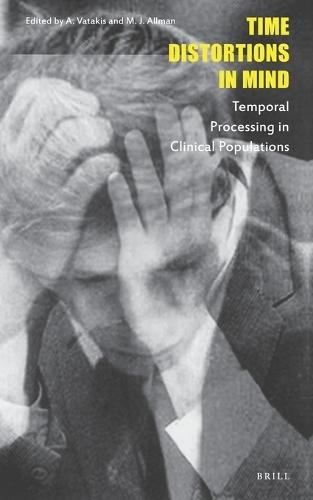
Time Distortions in Mind
Temporal Processing in Clinical...
Hardback
$521.95 $417.90
Not in-store but you can order this