Beat the rise! Delivery fees are going up soon. INFO


Born in 1983, James Jackson grew up fascinated by history and aviation, so it was unsurprising that he would eventually combine both of his hobbies. He graduated in 2004 with a Bachelors Degree in Modern History from the University of East Anglia before returning to higher education in 2013 to take a Masters Degree in History at Lancaster University. Following his studies he began researching historical aviation. His works include articles for historical aviation magazines, a 2018 book on British anti-submarine helicopters in the Project Tech Profiles series for Blue Envoy Press and Teach for the Sky on postwar RAF flying training aircraft for Crécy Publishing in 2021. His research interests are wide and include the design and development of aircraft, helicopters and naval aviation. James lives in the North West of England.
If you enjoy building naval aircraft, don't miss Crécy Publishing's new book Wings Over the Fleet, which is packed with great images and text... as CHRIS CLIFFORD discovers. Naval aviation is a splendid theme, with Fleet Air Arm subjects being especially satisfying for many modellers. With that in mind, Crécy Publishing's lavish new hardback under the Hikoki imprint, Wings Over the Fleet, offers an absolute wealth of lovely photographs, insightful text and more. The focus is British naval aircraft from 1945 and, if you know anything about the topic, you'll appreciate there is a wide choice of relevant flying machines to learn about and replicate, in various scales. Crécy's 400-page package of stunning visuals, history and technical detail, along with drawings and data tables, provides a broad and deep examination of the aircraft operated by the Royal Navy from war's end to the present. Classic types are covered... Sea Hornet, Scimitar, Sea Vixen, Gannet, Wessex and many more. However, just as interesting as the serving aircraft, the book also delves into project/specification aircraft, which never left the drawing board... yet could make interesting models for those happy to engage in conversion work and scratch-building. For example, a more achievable transformation could involve the Airfix Bristol Belvedere to portray the projected HAS.1 anti-submarine variant, which never crystalised. If you'd like more inspiration and facts regarding the legendary Sea King, look no further, as it's just one facet of the Anti-Submarine Helicopters chapter. Its replacement the Merlin also features, but if you lean more towards fast jets, Phantom and Sea Harrier fans also have plenty to savour. Of course, no work on British naval aviation would be complete without study of the Buccaneer, which has its own dedicated section. In terms of visual reference, real gems sit among the vast number of photos. The colour view of a Sea Vixen FAW.1 with Day-Glo fuel tanks, dummy Firestreak missiles and refuelling probe will almost certainly generate a desire to build it as such. If rotary-winged machines float your boat, you'll love the shots of Westland Wessex airframes in trial camouflage - and I'm already inspired to build the unique example in PRU Blue and Devon Red. See a full build of Airfix's 1/48 Fairey Gannet hereCool colour shotsFor a more in-depth focus, there's text on the workings of a carrier strike group and biographies of carriers and other vessels. Aircraft serial number lists by type are provided, as is a full tally of requirements and specifications - highlighting the large number of actual and 'what might have been' machines. While many earlier images are in black and white, there are still splendid colour studies to enjoy, especially of more modern types. The wonderful image of a Sea Venom FAW.21 on Page 91 is a case in point, being highly useful in revealing differing tones of the upper surface Extra Dark Sea Grey. Any modeller interested in British post-war aviation should find this book a real treat, but of course, especially if they favour sea-going types - and it's a highly useful reference if you're a novice with the subject. This Hikoki hardback will provide many happy hours' reading and prompt untold build ideas, which could even include carrier deck dioramas. It's excellent value too, at £34.95 direct from Crécy Publishing and its official retailers. -- Chris Clifford * Key Model World *
Highways and Airways, Their Relation...
Paperback
$45.95 $39.11
Not in-store but you can order this
Build a Drone
A Step-by-Step Guide to Designing,...
Paperback
$32.99
Not in-store but you can order this
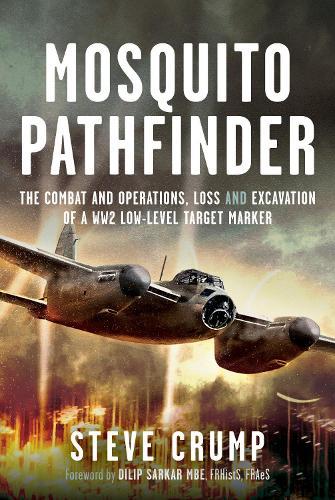
Mosquito Pathfinder
The Combat and Operations, Loss...
Hardback
$79.99
Not in-store but you can order this