PRIZES to win! PROMOTIONS


Prof. Abhijit Mukherjee received his PhD degree from the University of Kentucky, United States and is a postdoctoral fellow at the University of Texas at Austin, United States. He has served as the physical hydrogeologist at the Alberta Geological Survey in Canada and is currently a professor at the Department of Geology and Geophysics, and the School of Environmental Science and Engineering at the Indian Institute of Technology Kharagpur, India. Prof. Mukherjee’s main research area is hydrogeology, including water pollution, scarcity, and governance. He is known globally for his studies on geological and human-sourced groundwater pollution and has done extensive work on delineating groundwater scarcity using field observations, advanced computation, and Artificial Intelligence techniques. He has received many distinctions, including the highest award in Indian science. He is a fellow of the Geological Society of America, the American Geophysical Union, and the Royal Society of Chemistry. He has editorial roles in the Journal of Hydrology, Applied Geochemistry, Journal of Earth System Sciences, Scientific Reports, ES&T Letters, ES&T Engineering, and Water Resources Research. He is the editor of several books, including Groundwater of South Asia and Global Groundwater: Source, Scarcity, Security, Sustainability and Solutions.
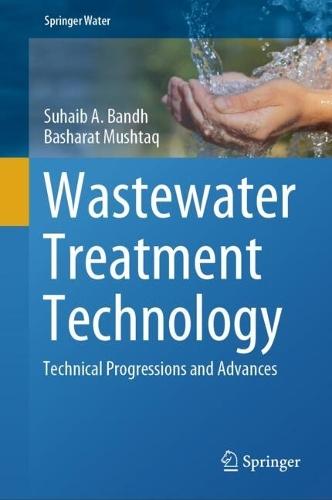
Wastewater Treatment Technology...
Technical Progressions and Advances...
Hardback
$415.95 $332.78
Not in-store but you can order this
Water Desalination Units
Designing High-End Sustainable Units...
Paperback
$38.95 $33.32
Not in-store but you can order this
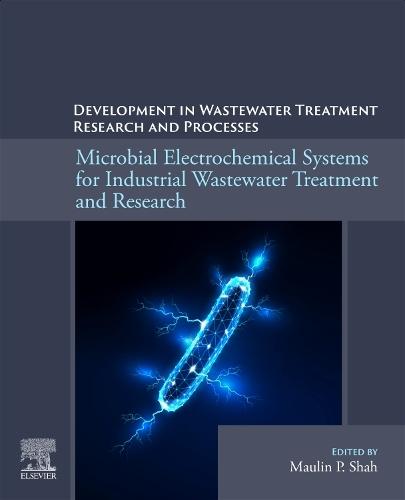
Microbial Electrochemical Systems...
Developments in Wastewater Treatment...
Paperback
$399.95
Not in-store but you can order this
Wastewater Treatment Plants
Processes, Assessment, Design and...
Hardback
$385.95 $308.92
Not in-store but you can order this
Polymer Nanocomposite Membranes...
Recent Developments, Future Opportunities,...
Paperback
$402.95
Not in-store but you can order this
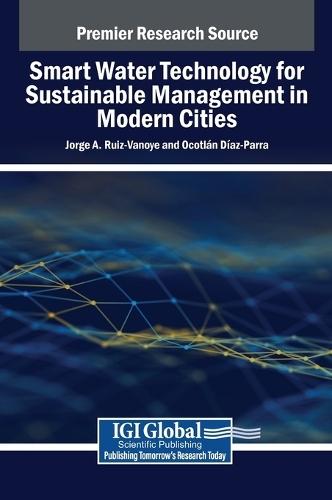
Smart Water Technology for Sustainable...
Hardback
$757.95 $606.14
Not in-store but you can order this