Bargains! PROMOTIONS

Close Notification

Your cart does not contain any items

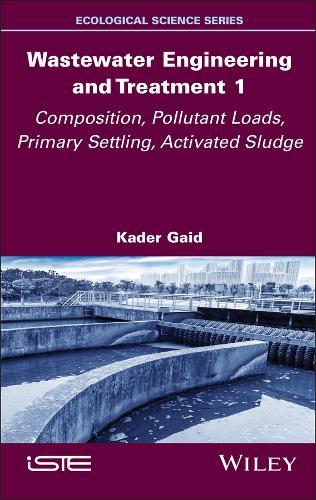
Wastewater Engineering and Treatment 2

Membranes, Hybrid Systems, Bacteria Beds and...

Kader Gaid (Alger University of Science and Technology Houari Boumediene, Algeria)

$281.95

Hardback

Forthcoming
Pre-Order now

QTY:

English
ISTE Ltd
25 June 2026
Series: ISTE Invoiced

Wastewater Engineering and Treatment 2 : Membranes, Hybrid Systems, Bacteria Beds and Biofilters, Biological Disks by Kader Gaid (Alger University of Science and Technology Houari Boumediene, Algeria)

To see more like this while you're visiting abbeys.com.au, please click the underlined category links on our website.

To see more by this author, please click the underlined author name.

If this is part of a series, please click the highlighted Series link to see more in the series.

By:  
Imprint:   ISTE Ltd
Country of Publication:   United Kingdom
ISBN:   9781836690566
ISBN 10:   1836690568
Series:   ISTE Invoiced
Pages:   304
Publication Date:  
Audience:   Professional and scholarly ,  Undergraduate
Format:   Hardback
Publisher's Status:   Forthcoming
Chapter 1. Membrane Bioreactors 1 1.1. Introduction 1 1.2. MBR configurations 2 1.3. Types of membranes 5 1.4. Description of general configurations of MBRs 8 1.4.1. Immersed membranes 8 1.4.2. MBR with external loop 14 1.5. MBR dimensioning parameters 19 1.5.1. Mechanical pretreatments 19 1.5.2. Buffer tank 20 1.5.3. Other factors to be taken into account 21 1.6. Tank–membrane association 22 1.6.1. Parameters linked to the biological tank 22 1.6.2. Parameters related to the membrane 33 1.6.3. Management of membrane filtration 41 1.7. Membrane clogging 43 1.7.1. Parameters influencing membrane clogging 44 1.8. Membrane cleaning 47 1.8.1. Chemical cleaning 48 1.8.2. Implementation of cleaning 50 1.9. Performances and warranties 51 1.9.1. Physico-chemical and microbiological guarantees 52 1.9.2. Removal of endocrine disruptors (EDs) 54 1.9.3. Hydraulic guarantees 55 1.9.4. Membrane warranties 55 1.10. Example of dimensioning of MBR with external loop 57 1.10.1. Characteristics of supply water 57 1.10.2. Pretreatment required for the MBR 58 1.10.3. Characteristics required for the treated water 60 1.11. Conclusion 61 1.12. References 62 Chapter 2. Hybrid Systems 71 2.1. Introduction 71 2.2. MBBR 74 2.2.1. Treatment system 79 2.2.2. Materials 83 2.2.3. Dimensioning 88 2.2.4. Operating parameters 93 2.2.5. Implementation 98 2.2.6. Advantages of MBBRs 108 2.2.7. Disadvantages of MBBRs 110 2.3. IFAS 111 2.3.1. Operating principle 111 2.3.2. Materials 113 2.3.3. Implementation and operation 114 2.3.4. IFAS operating parameters 115 2.3.5. IFAS advantages and disadvantages 117 2.3.6. MBBR versus IFAS 118 2.4. Hybrid plant system: Organica FBR 120 2.4.1. Operating principle 120 2.4.2. Performances 123 2.4.3. Invasive risks of plants 127 2.5. References 131 Chapter 3. Trickling Filters and Biofilters 137 3.1. General information on biofilms 137 3.2. Trickling filters 142 3.2.1. Role of the external support surface for bacteria fixation 143 3.2.2. Ecology of trickling filters 144 3.2.3. Creation of trickling filters 144 3.2.4. Classification of trickling filters 158 3.2.5. Implementation of recirculation 163 3.2.6. Using trickling filters 165 3.2.7. Calculations of trickling filters. 168 3.2.8. Performances 173 3.2.9. Advantages and drawbacks 174 3.3. Biofilters 174 3.3.1. Principle 176 3.3.2. Implementation and choice of material 179 3.3.3. Biofiltration alternatives: operation in immersed fixed filters and fixed trickle filters 184 3.3.4. Dimensioning of biofiltration 189 3.3.5. Biofiltration performances 195 3.3.6. Biofilter fields of use 199 3.3.7. The place of biofilters in the wastewater plants 200 3.3.8. Arguments related to biofilters 205 3.3.9. Performances of biofilters 207 3.3.10. Biofilter processes 208 3.4. Conclusion 257 3.5. References 258 Chapter 4. Rotatory Biological Contactors 263 4.1. General information and rotatory biological contactor ecology 263 4.2. Implementation of RBCs and wastewater quality 264 4.3. Dimensioning of RBC facilities 267 4.3.1. Applied surface load 267 4.3.2. Geometry of RBCs 270 4.3.3. Hydraulic loading rates 271 4.3.4. Residence time 271 4.3.5. Liquid–solid separation 271 4.3.6. Sludge production 272 4.3.7. Sludge retention time 273 4.3.8. Energy consumption 273 4.3.9. Removal of organic substances 273 4.3.10. Nitrogen treatment 274 4.4. Factors influencing the RBC process 278 4.4.1. Choice of the liquid–solid separation technique 278 4.4.2. System hydraulics 278 4.4.3. Influence of DO 278 4.4.4. Rotational velocity 279 4.4.5. Influence of temperature 281 4.4.6. Influence of pH 281 4.4.7. Influence of fats (oil and grease) 281 4.4.8. Land use 281 4.5. Advantages and drawbacks of the system 282 4.5.1. Advantages 282 4.5.2. Drawbacks 282 4.6. RBC processes 283 4.6.1. Various suppliers 283 4.6.2. Focus on the Ecodisk process (Veolia) 283 4.7. References 285 Index 289

See Also