Beat the rise! Delivery fees are going up soon. INFO


Dr. Michael (Mick) Calcutt is a Professor and the Director of Graduate Studies for the Molecular Pathogenesis and Therapeutics Program at the Department of Veterinary Pathobiology, College of Veterinary Medicine, University of Missouri. He completed his BSc. in the University of Sheffield, UK, and his Ph.D in the University of Leicester, UK. Dr. Calcutt's research focuses on aspects of the molecular genetics and pathogenesis of Mycoplasmas, a diverse genus of cell wall-less bacteria that includes many important pathogens of food animals and humans. In the absence of a cell wall, the single limiting membrane represents the unique and critical interface between the pathogen and host. Analysis of the repertoire, function and potential antigenic variation of surface membrane proteins is one of the primary research interests in the laboratory, together with understanding chromosomal dynamics and the role of mobile genetic elements in such plasticity. Increasingly, whole genome sequencing and comparative genomic approaches are being exploited to systematically assess the deduced surface proteome, horizontal gene transfer and accessory gene pool that likely contribute to the pathobiology of these organisms. Dr Gurtler completed a Ph.D. program in 1996 at La Trobe University in the Department of Microbiology. The main contribution of this work was the development of a universal bacterial typing technique based on the 16S-23S rDNA spacer region. The technique is now extensively used in many areas of Microbiology including Diagnostic, Environmental and Veterinary Microbiology. Citations to the articles Dr Gurtler wrote on this topic total >1000 with >830 citations alone to the 1996 review published in the journal “Microbiology. Dr Gurtler wrote an invited review on genomic typing, taxonomy and identification of bacterial isolates for the International Journal of Systematic and Evolutionary Microbiology (IJSEM). In addition to fundamental research, Dr Gurtler has also had experience with the application of this technology to the medical diagnostic laboratory in the fields of molecular microbiology and human molecular genetics. Dr Gurtler has been involved full time in diagnostic microbiology over many years resulting in the adoption of a method that identifies Mycobacterium species directly from clinical specimens without the need for culture in specimens positive for acid fast bacilli, the discovery of Nocardia veterana, and the development of many diagnostic tests. In the last twelve years Dr Gurtler has been an Editor for the Journal of Microbiological Methods (JMM) and in the last 5 years Serial Editor of Methods in Microbiology (MIM) with the publication of 9 volumes covering diverse subjects such as Biofilms, Nanotechnology, COVID-19 and Fluorescent Probes.
L'Intervention du Glycogene dans...
Paperback
$38.95 $32.99
Not in-store but you can order this
The Effect of Salts on the Paracasein-Sodium...
Paperback
$38.95 $32.99
Not in-store but you can order this
Studies of Some Globulins and Deamidized...
Paperback
$38.95 $32.99
Not in-store but you can order this
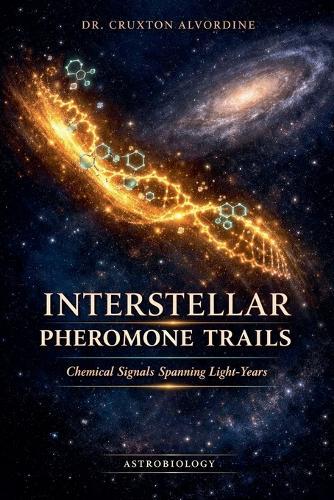
Interstellar Pheromone Trails
Chemical Signals Spanning Light-Years...
Paperback
$60.95 $51.40
Not in-store but you can order this
Laboratory Manual Detection of Poisons...
Hardback
$100.95 $80.58
Not in-store but you can order this
Biochemical Laboratory Methods for...
Paperback
$55.95 $47.68
Not in-store but you can order this