Beat the rise! Delivery fees are going up soon. INFO


The Author: Michael Cotsell received his Ph.D. in literature (Victorian studies) from Shakespeare Institute, University of Birmingham, England. He taught in Zimbabwe and Northern Ireland before joining the University of Delaware's English Department in 1989. His research is primarily concerned with the relations of trauma and culture, particularly with reference to American and postcolonial literatures. Dr. Cotsell was Associate Editor of The Dickens Companions series and General Editor of the English Literature and the Wider World series. He is the author of The Companion to Our Mutual Friend and Barbara Pym and editor of Our Mutual Friend in The World's Classics series. He has published and delivered papers on a wide variety of topics from Charles Dickens, John Henry Newman, and Victorian masculinity to David Mamet, Sam Shepard, and semiotics and trauma.
Michael Cotsell reminds us of the existence of a conceptual framework that carries tremendous explanatory power in its capacity to cogently link the realm of the psychological and personal to that of the social and political. The continued ubiquity of trauma and dissociation in contemporary life render the dissociationist perspective as relevant today as it was in the modernist epoch. Consequently, the significance of 'The Theater of Trauma' extends well beyond the specific territory it covers; it lies in its potential to open new vistas for psychology, for literary criticism, and a wide spectrum of other disciplines concerned with the interface between society and individual experience. (Steven N. Gold, Former President, International Society for the Study of Dissociation) Michael Cotsell makes an intriguing case for the importance (which has, until now, been virtually ignored) of the theories of the French psychologist Pierre Janet to the modernist movement in literature. (Thomas J. Cousineau, Professor of English, Washington College, Maryland)
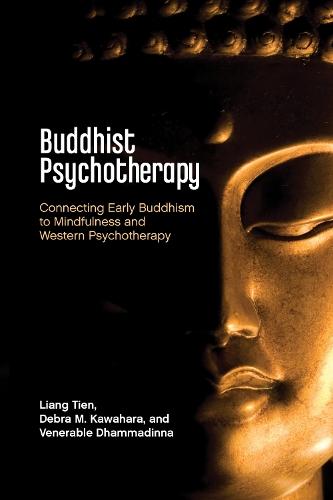
Buddhist Psychotherapy
Connecting Early Buddhism to Mindfulness...
Paperback
$103
Not in-store but you can order this
Man for Himself
An Inquiry into the Psychology of...
Paperback
$33.99
Not in-store but you can order this
The New Rulebook
Notes from a psychologist to help...
Paperback
$27.99
Not in-store but you can order this
Empire of Normality
Neurodiversity and Capitalism
Paperback
$32.95
Not in-store but you can order this
Health Through Will Power
with an appendix featuring two chapters...
Paperback
$25.95 $23.54
Not in-store but you can order this