Beat the rise! Delivery fees are going up soon. INFO


Matthew Poole is a curator of contemporary art and a curatorial theorist. He currently works at California State University San Bernardino, where he is the Chair of the Department of Art. Manuel Shvartzberg is an architect and researcher. He is currently based in New York City where he is a Researcher at The Temple Hoyne Buell Center for the Study of American Architecture, GSAPP and a Graduate Fellow of the Institute for Comparative Literature and Society, both at Columbia University, USA.
The Politics of Parametricism is the book I have been waiting for; it stands alone as the best attempt yet to comprehensively understand this ‘movement for the 21st century’. Most importantly, it is the first book to critically contextualise Patrik Schumacher’s contributions to architectural theory, and to seriously respond to his claims ... Politics engages and explores Parametricism with great care ... [and] has done much to untangle the mess of misconceptions and misinformation surrounding the architect’s frequently controversial positions. -- Jack Self * The Architectural Review * Parametricism is the best and most comprehensive definition of the new technical object of the digital age. Is there a politics of parametricism? Is it different from the politics of the technical object of the industrial age? The answer is yes, of course. The essays in this book also prove without doubt that, in the age of parametricism, politics itself is different from what it was before the digital turn. -- Mario Carpo, Reyner Banham Professor of Architectural History and Theory, The Bartlett, UCL, UK Patrik Schumacher writes here that in parametricism participation in political controversy must be taboo. Against this prohibition, the other contributors to The Politics of Parametricism skillfully prise open his argument to reveal the controversial politics – of control, power and the market, of representation, calculation, and simulation – within. A significant and timely intervention, this collection reaffirms the power, potential and necessity of architectural critique. -- Douglas Spencer, Architectural Association School of Architecture, UK
Modern Architecture of Quito
Global, Local, and the In-Between...
Hardback
$190
Not in-store but you can order this
The Scope of Architectural Theory...
Hardback
$415.95 $332.78
Not in-store but you can order this
Is Architecture Art?
An Introduction to the Aesthetics...
Paperback
$49.99
Not in-store but you can order this
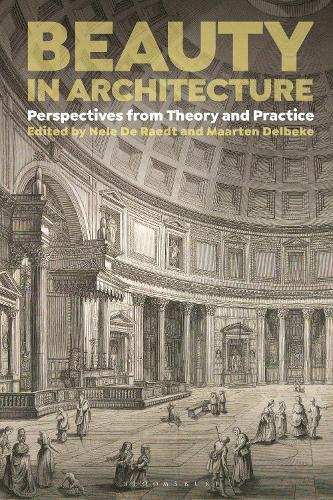
Beauty in Architecture
Perspectives from Theory and Practice...
Hardback
$170
Not in-store but you can order this