PRIZES to win! PROMOTIONS


Raphael Morschett holds a PhD in film studies from Saarland University, Germany, where he was part of the interdisciplinary research training group “European Dream-Cultures.” He is an independent scholar with a background in linguistics, philosophy, and psychology. He gained work and research experience in the UK, Italy, and the USA and has previously published and lectured on David Lynch, film theory, and phonology.
[This] book is [a] sharp and sophisticated guide to ways of thinking about the cinema as a dream. Recommended. Advanced undergraduates through faculty. * CHOICE * More than any other living artist, David Lynch has deeply impacted contemporary perceptions of dreaming. The arrival of a wonderful new book, The Oneiric in the Films of David Lynch, helps to explain why “Lynchian” is now such a widely-used synonym for dreamy bizarreness. Raphael Morschett traces the dream theme across the entire arc of Lynch’s career, not simply to provide a chronological catalog but to illuminate the remarkable unfolding of the many complex roles that dreaming plays in his films. This splendid book is a gift to anyone with an interest in Lynch’s work and the dynamic relationship between dreaming and artistic creativity. * Kelly Bulkeley, Director, the Sleep and Dream Database, USA * In addition to a trademark medial atmosphere intertwined with a surreal approach to storytelling, the cinema of David Lynch is renowned for transforming the crude awakened reality into a vivid and unforgettable dream. Thought provoking and rich, The Oneiric in the Films of David Lynch is a compelling and serious attempt to uncover, analyze, and explain the theoretical grounds of this Lynchian phenomenon. As the first of its kind, the book illuminates the darkness of Lynch’s dreamworld. It brilliantly navigates between theoretical observations and medial self-reflective insights and tackles both philosophical and psychological challenges with utmost success. The book reintroduces the Lynchian cinematic universe in a unique and elucidating way—joyfully forcing us to rethink and reconsider Lynch anew. * Shai Biderman, Assistant professor, Beit Berl College and Tel Aviv University, Israel *
Sweet Dreams Journal
Prompts & Rituals to Record, Decode...
Paperback
$24.99
Forthcoming
You can preorder this
A Little Bit of Lucid Dreaming
An Introduction to Dream Manipulation...
Hardback
$14.99
Forthcoming
You can preorder this
The Moon Dust Dream Dictionary
Unlock the true meanings of your...
Paperback
$37.99
Forthcoming
You can preorder this
Dream Ritual Oracle Cards
A 48-Card Deck and Guidebook
Mixed media product
$39.99
Forthcoming
You can preorder this
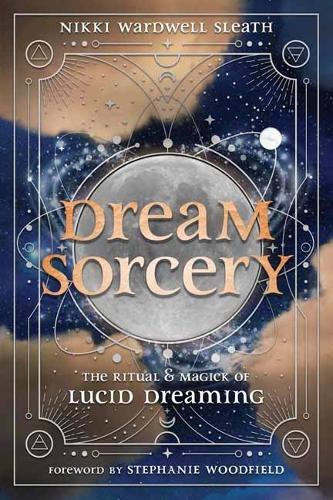
Dream Sorcery
The Ritual & Magick of Lucid Dreaming...
Paperback
$46.99
Forthcoming
You can preorder this