Bargains! PROMOTIONS


Akihisa Mori is an Associate Professor of Global Environmental Economics and leads the team sustainability transitions at Kyoto University, Japan. He served as vice president of the Asian Association of Environmental and Resource Economics in 2019–21. He has published sustainability energy transition research in Environmental Innovation and Sustainability Transitions, Energy Research & Social Science, and Energy Policy. Nur Firdaus is a Researcher at the National Research and Innovation Agency (BRIN), Indonesia and a Ph.D. student in the team sustainability transitions at Kyoto University. Yasuhiro Ogura is a Senior Research Fellow at the National Institute of Science and Technology Policy (NISTEP). He is engaged in government foresight activity for science, technology, and innovation policies in Japan after getting a Ph.D. in Global Environmental Studies at Kyoto University.
'Despite global political uncertainty surrounding the net-zero emission target by mid-century, the energy transition remains strong, with Southeast Asia playing a key role. This book provides in-depth analysis of energy transition in the region, focusing on electricity and finance. It examines why the Paris-Glasgow financial regime has progressed slowly and explores why coal-based power generation has largely shifted to natural gas rather than renewables. By detailing the situation in several Southeast Asian countries, this book is essential reading for anyone seeking to understand the region's ongoing energy transition.' Budy Resosudarmo 'This document provides a compelling and comprehensive analysis of the net-zero transition, highlighting the essential systemic changes across financial and energy sectors. It underscores the urgency of sustainable finance and the strategic use of transitional fuels like natural gas, while addressing the challenges of equity and affordability in energy access. A crucial read for understanding the multifaceted approach needed to achieve a just and effective transition to a low-carbon future.' Nuki Agya Utama, Asia Zero Emission Centre 'Finance is key to the transition towards a net-zero future in emerging markets and developing economies. Countries in the rapidly developing south-east Asian (SEA) region are grappling with this challenge and are exploring various strategies to address the same. This extremely useful and topical book discusses various aspects of interlinkages of finance with the transition to a net-zero future in the SEA economies, including but not limited to climate related transition risks, stranded assets, financial mechanisms like JETP, preference for natural gas based power, and cost-benefit of power systems transformation. With a thoughtfully curated set of chapters dealing with inter-linked yet distinct issues, the book is a must read for stakeholders interested in understanding the rapidly evolving transition of the SEA region.' Vaibhav Chaturvedi, Council on Energy, Environment and Water (CEEW)
The World In A Grain
The Story of Sand and How It Transformed...
Paperback
$35
Not in-store but you can order this
Transformative Transdisciplinarity...
An Introduction to Community-Based...
Paperback
$64.95
Not in-store but you can order this
There Is No Planet B
A Handbook for the Make or Break...
Paperback
$21.95
Not in-store but you can order this
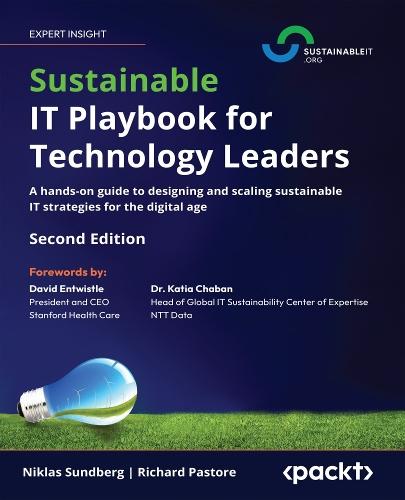
Sustainable IT Playbook for Technology...
A hands-on guide to designing and...
Paperback
$148.95 $119.38
Not in-store but you can order this
Natural Asset Farming
Creating Productive and Biodiverse...
Paperback
$44.99
Not in-store but you can order this