Beat the rise! Delivery fees are going up soon. INFO


Susan Zieger is Associate Professor of English at the University of California, Riverside. She is the author of Inventing the Addict: Drugs, Race, and Sexuality in Nineteenth-Century British and American Literature.
Zieger's brilliant analysis of ink's centrality to globalization raises parallel questions about the planetary roots and routes of other resources featured in this study as underwriting the new scale of mass mediation, such as the tobacco that provided the dreamy smoke screen for seductions of information, or the paper that supplied the transition from pipes to cigarettes... Like so many stimulants, it is tremendously satisfying while waking the reader's mind to seek more.-- Victorian Studies Zieger's notion of the mediated mind is not the flattened, homogenized mentality often implied by discussions of mass communications; she documents and explores these changes with far more detail and finesse than an informal commentary can convey.-- Inside Higher Ed At first glance, our culture's consumption of mass media--with our twenty-four-hour news cycle, social media, and love of iPhones--may not seem to have much in common with the nineteenth century. Susan Zieger's The Mediated Mind: Affect, Ephemera, and Consumerism in the Nineteenth Century, however, argues otherwise. By examining the close relationship between consumers and goods in nineteenth-century Britain, Zieger presents ephemeral items and the conversations they sparked as prefigurations of twenty-first century forms of mass media.-- Victorian Periodicals Review An astoundingly rich and wonderfully diverse account of the experience of mass media in Britain at the end of the nineteenth century. The Mediated Mind provocatively and sensitively expands the very notion of mass media beyond the audio-visual parameters in which it is conventionally considered and explores the varied ways in which print and printed ephemera shapes nineteenth-century British culture.---John Lurz, Tufts University,
Consumed
The need for collective change;...
Paperback
$24.99
Not in-store but you can order this
Everyday Eating
Food, Taste and Trends in Britain...
Paperback
$45.95
Not in-store but you can order this
Speculative Communities
Living with Uncertainty in a Financialized...
Hardback
$170.95
Not in-store but you can order this
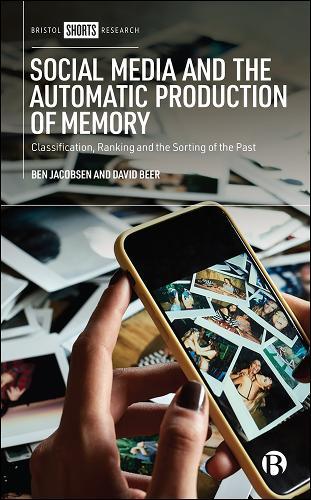
Social Media and the Automatic Production...
Classification, Ranking and the...
Hardback
$88.95
Not in-store but you can order this
Citizens
Why the Key to Fixing Everything...
Hardback
$49.95 $42.84
Not in-store but you can order this
Conversations About History, Volume...
Paperback
$39.95 $34.02
Not in-store but you can order this