Beat the rise! Delivery fees are going up soon. INFO


Capra received his PhD in theoretical physics from the University of Vienna and has done research in high-energy physics at several European and American universities. He has written and lectured extensively about the philosophical implications of modern science and is the author of The Tao of Physics, The Turning Point, Uncommon Wisdom and The Web of Life. Currently Director of the Center for Ecoliteracy in Berkeley, California, he lives in Berkeley with his wife and daughter.
Probably one of the most original thinkers of recent years, Fritjof Capra shot to popular fame with The Tao of Physics in 1975, an attempt to combine the worlds of hard science - he has a PhD in theoretical physics - with philosophy and spirituality. His latest book is more ambitious yet, taking in new discoveries in genetic science and biotechnology and incorporating them into his individualistic world view of how mankind subsists on this planet - or, more accurately, how we could and should subsist. Capra's main appeal is that he can popularise science in the same way as Stephen Hawking or John Gribbin, presenting complicated concepts in digestible chunks of plain English. Yet he goes a step further still, weaving a web between all the natural sciences, from physics to psychology, until the reader is almost dizzy with the possibilities he presents. His aim is no less than a systemic understanding of life and its meaning, bridging the gap between the physical and the non-physical by applying the same understanding of form, matter, process and meaning to everything we encounter, whether it is the creation of a single-cell organism or the structure of global capitalism. It is a concept of breathtaking audacity, the idea that the meaning of life itself can be summarised in a paperback of less than 300 pages, yet somehow Capra seems to make it all make sense. Whether he is discussing the nature of conscious experience, the aims of campaigners against GM food, or the transition to the hydrogen economy, he is never less than simple and instructive. He makes no bones about stating, in his epilogue: 'The great challenge of the twenty-first century will be to change the value system underlying the global economy, so as to make it compatible with the demands of human dignity and ecological sustainability'; and, although such a grand aim will no doubt attract scepticism, it is certainly worth reading this genre-defying book to find out more about the possibilities Capra sees for humanity. (Kirkus UK)
Conversations About History, Volume...
Hardback
$67.95 $57.60
Not in-store but you can order this
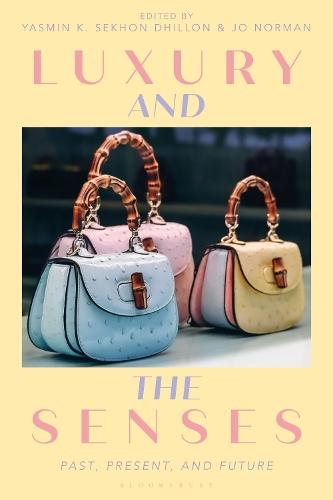
Luxury and the Senses
Past, Present, and Future
Hardback
$170
Not in-store but you can order this
Unending Capitalism
How Consumerism Negated China's...
Hardback
$288.95 $230.85
Not in-store but you can order this
Influences of Social Media on Consumer...
Paperback
$562.95 $450.14
Not in-store but you can order this