Beat the rise! Delivery fees are going up soon.


Parthasarathi Shome is Adviser to the Indian Finance Minister. He was Chairman of the Expert Committee on General Anti-Avoidance Rules (GAAR), Government of India, from July to October 2012; Director and Chief Executive of the Indian Council for Research on International Economic Relations (ICRIER), New Delhi, from 2011 to 2012; Chief Economist of Her Majesty's Revenue and Customs, United Kingdom, from 2008 to 2011; and Adviser to the Indian Finance Minister (Secretary) from 2004 to 2008. He received the highest civilian honour of the Government of Brazil, Commander of the Order of the Southern Cross, in 2000, for his contributions to Brazilian tax reform.
'This edited book provides a detailed description of India's perspective of the G20 development agenda. Laying out the purpose and evolution of the agenda in the context of the 2008-9 global financial crisis ... the book urges the extension of the G20 agenda in the post-2010 period to more efficiently address concerns of developing members ... such as India. In this vein, chapters of the book offer 'India's perspectives' on issues of the G20 development agenda ... that are significant to India. The chapters address these issues well, discuss the successes and failures of the G20 agenda to address these issues in a more global manner, and argue for expanding the G20 development agenda to include the perspectives of developing countries and make the G20 a 'gateway' to gain credibility in the global governance area. The book, with its issue-specific information and supporting tables and figures, represents an impressive 'Indian perspective' in assessing the G20 agenda.' R. Das, Choice 'This edited book provides a detailed description of India's perspective of the G20 development agenda. Laying out the purpose and evolution of the agenda in the context of the 2008-9 global financial crisis ... the book urges the extension of the G20 agenda in the post-2010 period to more efficiently address concerns of developing members ... such as India. In this vein, chapters of the book offer 'India's perspectives' on issues of the G20 development agenda ... that are significant to India. The chapters address these issues well, discuss the successes and failures of the G20 agenda to address these issues in a more global manner, and argue for expanding the G20 development agenda to include the perspectives of developing countries and make the G20 a 'gateway' to gain credibility in the global governance area. The book, with its issue-specific information and supporting tables and figures, represents an impressive 'Indian perspective' in assessing the G20 agenda.' R. Das, Choice
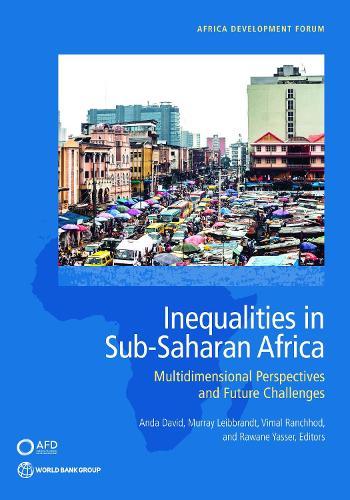
Inequalities in Sub-Saharan Africa...
Multidimensional Perspectives and...
Paperback
$86.95 $74.25
Not in-store but you can order this
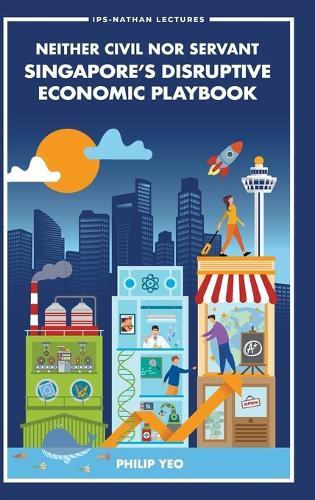
Neither Civil Nor Servant
Singapore's Disruptive Economic...
Hardback
$91.95 $78.06
Not in-store but you can order this
Privatising humanity
How our essential human needs became...
Hardback
$194.99
Not in-store but you can order this
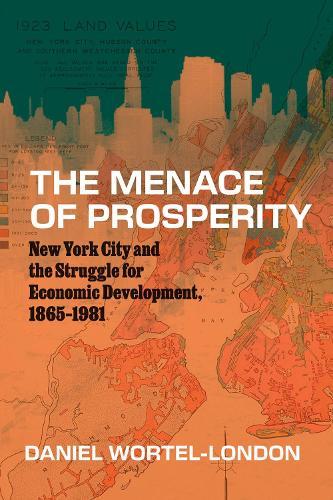
The Menace of Prosperity
New York City and the Struggle for...
Paperback
$53.95
Not in-store but you can order this
21st-Century Africa
Governance and Growth
Paperback
$107.95 $86.01
Not in-store but you can order this
Research On The Development Mechanism...
Hardback
$402.95 $322.75
Not in-store but you can order this