Beat the rise! Delivery fees are going up soon.


Barbara Schmenk is Professor of German and Applied Linguistics at the University of Waterloo, Canada
'In a profession known for its innovative approaches but also its dizzying turnover of pedagogic methods, it is refreshing to read a book that offers a lucid, original, and critical view of what is commonly called “traditional language teaching”. Through a well-constructed historical narrative, and a thorough analysis of some of the major canonical texts in the field, the author illuminates the binary prejudices, the political, economic and educational pressures that have prevailed in the language teaching profession since the advent of the “communicative revolution” in the seventies right up to the multilingual, translingual and translanguaging practices of the present day. Her witty, engaging style and her intelligent analyses and thoughtful reflections make a compelling argument for historicizing tradition and for drawing inspiration from local, less researched educational traditions and cultures. Traditional language teaching turns out to be an astonishingly fruitful topic of inquiry in language education and in applied linguistics in general. Definitely a promising avenue for future research.' * Claire J Kramsch, University of California, Berkeley, USA * 'The Fabrication of Traditional Language Teaching provides a powerful and immensely useful examination of the notion of traditional language teaching. Neither a critique nor a defence of traditional language teaching, Schmenk’s book seeks to provide an analysis of the concept as a discursive, ideological, and epistemological creation – an undertaking that can help us better understand much of contemporary language education theory and practice. She has, in short, done the “week off thinking” for us, and we will benefit greatly from her work.' * Timothy Reagan, The University of Maine, USA * 'A long-awaited book from one of our most powerful, steady leaders in Applied Linguistics and the multilingual humanities. This study helps us think hard and necessary things about alleged “traditionality” in our language teaching, and about tradition itself—what we love and hate about it, and how we sometimes use this word recklessly to dismiss what somehow vaguely haunts us on any given day. Are newness, novelty, and innovation always ultimately of immediate educational benefit, or might the spectacle of the new express a frenetic anxiety and paper over important and chronic truths? Twenty-first-century language teaching professionals need the keen-eyed and fearless reflection this book offers.' * David Gramling, University of British Columbia, USA * 'From the outset this book is a bold, brave and exciting illumination. Every page made me nod in an agreement and see the whole arena of language teaching in kaleidoscope of colours and depth of field which has so far eluded it. I firmly believe this book is theoretically and critically one of the most important works to appear in the last decade of scholarship in the field of language pedagogy and applied linguistics. It is intellectually rigorous. It pursues a problem which most of us simply failed to see in the shadows. It brings light and with it inspires the imagination an afresh, opening new vistas and potentially for decreation, delinking, and decoloniality.; * Alison Phipps, University of Glasgow, UK * ‘In a sweeping and highly reflexive retrospective this book successfully takes the term ‘tradition’ out of its dusty corner to inquire into its continuing values for language teaching. But that is not all. Barbara Schmenk takes a dive into notions of the term that move way beyond language to reflect on what tradition affords, making this book a must read beyond disciplinary boundaries. At a point in time where AI generated texts are blooming, it challenges to use traditionally inspired ways of reading, learning and writing and to especially look for the ‘cracks’ in texts that produce thinking instead of believing in the all to even and smoothed out lines AI makes us believe were our future.’ * Andrea Behrends, University of Leipzig, Germany *
The researchED Guide to Primary...
An evidence-informed guide for teachers...
Paperback
$31.99
In Stock 😊
The Flight of a Butterfly or the...
Using Technology to Transform Teaching...
Paperback
$44 $15
In Stock 😊
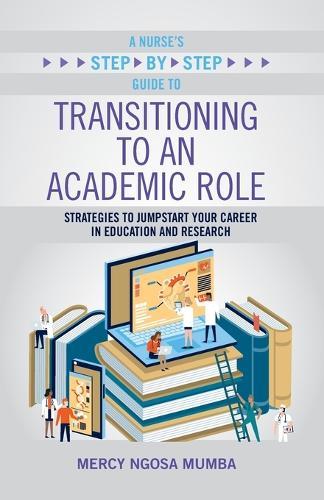
A Nurse's Step-By-Step Guide to...
Strategies to Jumpstart Your Career...
Paperback
$77.95
Not in-store but you can order this