Bargains! PROMOTIONS


Brian Irwin is Adjunct Assistant Professor at John Jay College of Criminal Justice, USA. He received a PhD in Philosophy from Stony Brook University, and has published articles on phenomenology and the cognitive sciences, architecture and urban design, and the philosophy of place.
""According to Irwin, we rely on a false dilemma when describing environmental destruction that separates nature from the human world. His book explores the phenomenological ways this represents a loss in our lives. By dichotomizing nature and culture, we view the natural world as a ""storehouse of resources,"" or pristine spaces humans enter and disturb. Contemporary living means residing in a forgetfulness about our participation in the environment, which leads to poor self-understanding, and manifests in a distorted relation to our environment. The result is this ""uncanniness,"" made worse in the technological age. He uses the term intra-action to convey that an organism ""acts within and as a part of its environment, rather than acting upon or toward it"" (p. 13). Irwin asks if, in Heidegger's estimation, we are able to overcome this uncanniness. Informed by Merleau-Ponty's philosophy of the flesh, Irwin envisions an embodied inhabitation in the world with the understanding that the uncanniness may be inescapable. Highly recommended. Advanced undergraduates through faculty."" --M. A. Betz, Rutgers University, Camden, Choice Reviews
Molecular Red
Theory for the Anthropocene
Paperback
$19.99
Not in-store but you can order this
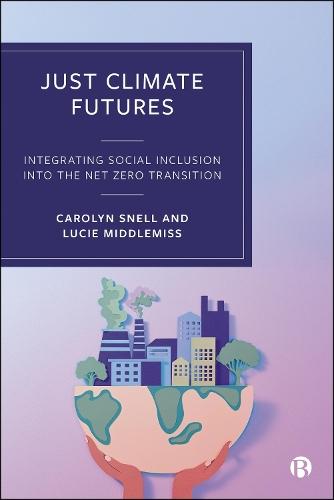
Just Climate Futures
Integrating Social Inclusion Into...
Paperback
$57.95
Not in-store but you can order this
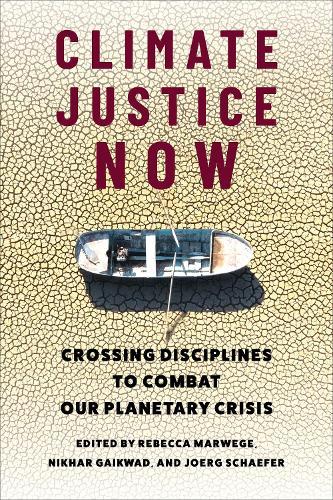
Climate Justice Now
Crossing Disciplines to Combat Our...
Hardback
$248.95
Not in-store but you can order this