PRIZES to win! PROMOTIONS


Udi Greenberg is Associate Professor of History at Dartmouth College. Author of The Weimar Century: German Émigrés and the Ideological Foundations of the Cold War, he has written on European thought and politics for the New Republic, The Nation, and Dissent.
The crisis and decline of European Christianity lately have obscured just how revolutionary and shocking the ecumenical healing of confessional rifts among Christians in the middle of the twentieth century really was. In his bold, fair-minded, and original interpretation, Udi Greenberg goes far beyond restoring to view the end of five hundred years of strife; he uncovers its dark roots on the political right and its underlying motivations in a decolonizing and secularizing world. This book is a masterpiece. -- Samuel Moyn, author of <i>Liberalism against Itself: Cold War Intellectuals and the Making of Our Times</i> Extraordinarily attuned to detail in ideas and practices, The End of the Schism is equally successful in chronicling one of the most monumental changes of twentieth-century history: the rapprochement between Protestantism and Catholicism. Brilliantly, Greenberg not only explains how Christians came together but also highlights the costs of that togetherness—costs that were not equally shared. -- Stefanos Geroulanos, author of <i>The Invention of Prehistory: Empire, Violence, and Our Obsession with Human Origins</i> A provocative and beautifully written book. Greenberg convincingly argues that what brought twentieth-century European Catholics and Protestants together under the nebulous banner of ‘Christian Democracy’ was not their disgust with fascism and the Holocaust but rather what they saw as the more pressing issues of their time: the spread of communism, the growing weakness of the patriarchal family, the unstoppable wave of decolonization, and, most significantly, the threat of secularization. As Greenberg shows, European liberal pluralism was thus not teleological or self-evident but rather a conscious attempt to produce and maintain social hierarchies of class, race, and gender. -- Camille Robcis, author of <i>Disalienation: Politics, Philosophy, and Radical Psychiatry in Postwar France</i> The surprising turns in the Christian churches’ entanglements in politics throughout Europe’s tumultuous twentieth century—from hostility to working-class demands and complicity with Nazi bloodshed to postwar restoration of family values and eventual embrace of decoloniality abroad and liberationist possibilities at home—are all compellingly explained in Udi Greenberg’s beautiful book. Brilliantly original; every chapter offers revelatory insights. -- Dagmar Herzog, author of <i>The Question of Unworthy Life: Eugenics and Germany’s Twentieth Century</i> The triumph of ecumenism is one of the great untold stories of modern European history. In this pathbreaking, enormously impressive study, Udi Greenberg shows us how, and why, it happened. Europe’s Christians did not simply lay aside the old grievances because they became better people. They became friends, instead, because they faced new enemies, and because Christianity could not survive without new tactics, and new alliances. As we seek to transcend divisions in our own day, this story has something to teach us all. -- James Chappel, author of <i>Golden Years: How Americans Invented and Reinvented Old Age</i>
Protestant Modernist Pamphlets
Science and Religion in the Scopes...
Hardback
$152.95 $122.02
Not in-store but you can order this
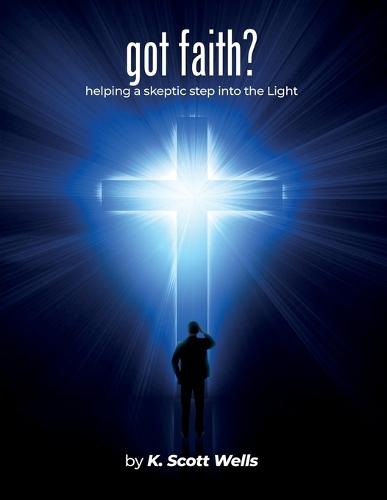
got faith?
helping a skeptic step into the...
Paperback
$36.95 $31.40
Not in-store but you can order this
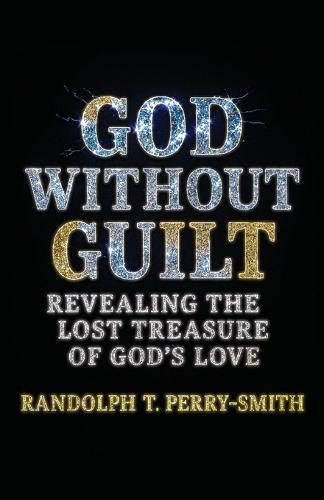
God Without Guilt
Revealing the Lost Treasure of God's...
Paperback
$29.95 $27.21
Not in-store but you can order this
La Cat��lico, pero no romano
Construyendo una identidad protestante...
Paperback
$25.95 $23.18
Not in-store but you can order this