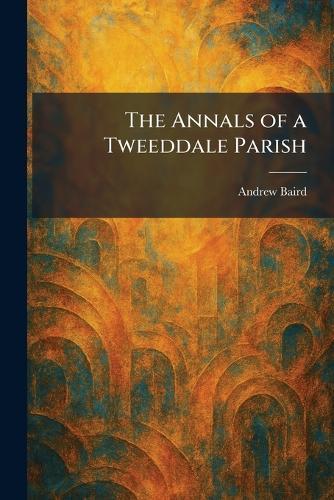
""The Annals of a Tweeddale Parish"" is a comprehensive historical account of a specific Scottish ecclesiastical district, offering a detailed look into the life, traditions, and development of the region. Written by the Reverend Andrew Baird, the work serves as an invaluable record of local history, documenting the evolution of the parish from its earliest foundations through to the early 20th century.
The narrative explores the intersection of church and community, detailing the influence of the parish on the social and moral fabric of Tweeddale. Readers will find meticulously researched accounts of local families, significant historical events, and the daily lives of the inhabitants. Baird's work captures the spirit of the Peeblesshire landscape, preserving the folklore and ancestral heritage of the area for future generations.
This volume is an essential resource for those interested in Scottish local history, genealogy, and the history of the Church of Scotland. Through its chronological structure, it provides a window into a bygone era, highlighting the enduring character of the Tweeddale people and their surroundings.
This work has been selected by scholars as being culturally important, and is part of the knowledge base of civilization as we know it. This work was reproduced from the original artifact, and remains as true to the original work as possible. Therefore, you may see the original copyright references, library stamps (as most of these works have been housed in our most important libraries around the world), and other notations in the work.
This work is in the public domain in the United States of America, and possibly other nations. Within the United States, you may freely copy and distribute this work, as no entity (individual or corporate) has a copyright on the body of the work.
As a reproduction of a historical artifact, this work may contain missing or blurred pages, poor pictures, errant marks, etc. Scholars believe, and we concur, that this work is important enough to be preserved, reproduced, and made generally available to the public. We appreciate your support of the preservation process, and thank you for being an important part of keeping this knowledge alive and relevant.