PRIZES to win! PROMOTIONS


Howard Wainer is an award-winning American statistician and research scientist. His areas of work include testing, graphical methods for data analysis and communication, and robust statistical methodology. He has served on the faculty of the University of Chicago, at the Bureau of Social Science Research during the Carter Administration, and as Principal Research Scientist in the Research Statistics Group at Educational Testing Service for twenty-one years, and in 2016, he retired after fifteen years as Distinguished Research Scientist at the National Board of Medical Examiners. Daniel H. Robinson is the K-16 Mind, Brain, and Education Endowed Chair at the University of Texas at Arlington. He received his Ph.D. in Educational Psychology in 1993 from the University of Nebraska where he majored in both learning/cognition and statistics/research. He previously taught at Mississippi State University, the University of South Dakota, the University of Louisville, the University of Texas at Austin, and Colorado State University. He has served as department chair, director, and associate dean of research.
'There is not a more pragmatically effective, yet maligned field in the behavioral sciences than the measurement of human abilities. It has been effective precisely because it has been built around measurement, and yet it is maligned precisely because it has been so effective in addressing real world issues. In 'Testing and the Paradoxes of Fairness' Howard Wainer and Daniel Robinson masterfully describe how and why this has occurred.' David Lubinski, Intelligence 'One of the best books I ever read on the place of testing in our culture.' David C. Berliner, Arizona State University 'Wainer and Robinson present an unblinking, data-based look at the discriminatory effects of both standardized testing—and the absence of standardized testing—on admissions, selection, licensing and other personnel decisions. The results for individuals, groups, institutions and society make clear the substantial costs of ignoring evidence in these decisions.' Arthur E. Wise, Education Author, Advocate and Policymaker
Exploring Education and Professional...
Through the Lens of Practice Architectures...
Paperback
$216.95
Not in-store but you can order this
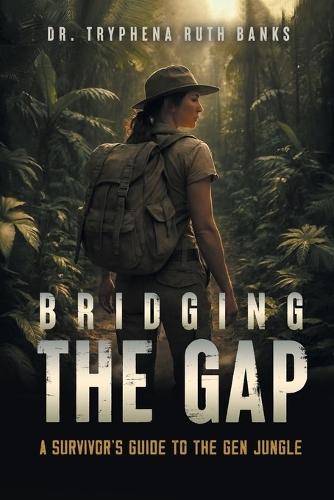
Bridging the Gap
A Survivor's Guide to the Gen Jungle...
Paperback
$32.95 $29.80
Not in-store but you can order this
Academic Skills Problems, Fifth...
Direct Assessment and Intervention...
Hardback
$138
Not in-store but you can order this
Chinois Express
30 Jours pour Passer de Zéro à Niveau...
Paperback
$34.95 $31.10
Not in-store but you can order this
The Learning Power Approach
Teaching Learners to Teach Themselves...
Paperback
$59.99
Not in-store but you can order this