PRIZES to win! PROMOTIONS


Kelle L. Marshall is Professor of French Studies at Pepperdine University, USA. Wendy D. Bokhorst-Heng is Professor in the Faculty of Education at Crandall University, Canada.
This volume offers an insightful, multi-layered exploration of French Immersion in New Brunswick, using and extending the Douglas Fir Group framework to analyze how language ideologies at macro, meso, and micro levels shape education policy and classroom practice. The book uniquely foregrounds immersion teachers as intercultural mediators, prepared to connect language learners’ identities with target-language communities. Blending rigorous theory with practical examples, it provides valuable tools for educators and policymakers alike. Essential reading for advancing bilingual education beyond economic narratives. * Sylvie Roy, Werkland School of Education, University of Calgary, Canada * Through a gradual unfolding of the macro, meso and micro forces at play, Kelle Marshall and Wendy Bokhorst-Heng reveal the intricate debates, perspectives, tensions, and at times contradictions, that emerge in bi/multilingual languages education, and specifically in the French/English immersion practice in New Brunswick, Canada. What is most impressive in this work is the careful unfolding of the complexity of the phenomenon of teaching languages bi/multilingually by authors who are themselves highly committed languages educators, reflecting deeply on their own framings and those of others and revealing the intricacy of the work of teachers of languages. They recognise the crucial need to build teachers’ meta-awareness of their own linguistic and cultural situatedness, their own ideological positioning, and their own and their students’ subjectivities. * Angela Scarino, University of South Australia, Australia * This compelling book offers a deeply nuanced exploration of the layered ideological terrain of French immersion education in New Brunswick, revealing how language, culture, and ideology intersect in classrooms and policy. Drawing on years of collaborative research and framed by the Douglas Fir Group’s model, the authors shed light on the powerful but often invisible role teachers play as cultural mediators. Their call for a more human-centered, intercultural approach to language education is both timely and necessary. A valuable and insightful contribution to applied linguistics and language policy, this book will resonate with educators, researchers, policymakers, and anyone seeking to understand the interplay between language, culture, and identity in immersion contexts and beyond. * Mathieu Martin-LeBlanc, University of Alberta, Canada * This book features findings stemming from qualitative studies set in the context of French immersion in Canada’s only bilingual province— New Brunswick. The multifaceted theoretical frameworks as well as the detailed contextualization offer a solid foundation to this unique work. The voices and perspectives of participants are front and centre, thus providing a sense of authenticity and resonance. The focus on ideologies at macro and micro levels affords an intriguing view of FI programs situated a complex historical/social/cultural/political context. This book is strengthened by the authors’ roles as experienced scholars and educators. * Paula Kristmanson, University of New Brunswick, Canada * This multi-faceted case study of languages education in New Brunswick, Canada, traces interleaving threads of ideologies, macro to micro, illustrating how these shape provisioning, curricula and pedagogies in languages education. The account is meticulously presented and robustly evidenced, revealing the temporal stickiness of ideologies, particularly neoliberalism, despite recognition of humanistic goals of intercultural engagement and identity formation. Advocating an intercultural orientation, the authors outline a richly conceptualized teacher training course and lesson plans incorporating the transformative process of reflection and reflexivity that enable this orientation. Beyond outstanding scholarship, Marshall and Bokhorst-Heng offer a deftly crafted narrative; an origin story that illuminates current provision, and a futuristic story of languages education reimagined; where we embrace people, in all their linguistic complexity and subjectivities, and strive towards reciprocal engagement and acceptance. * Michelle Kohler, University of South Australia, Australia *
Performative Language Learning with...
Embodied Research and Practice in...
Paperback
$100.95 $80.86
Not in-store but you can order this
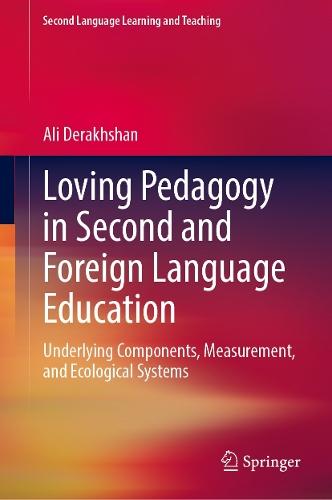
Loving Pedagogy in Second and Foreign...
Underlying Components, Measurement,...
Hardback
$326.95 $261.21
Not in-store but you can order this
Children's Literacy Development...
A Cross-Cultural Perspective on...
Hardback
$394.95 $316.22
Not in-store but you can order this
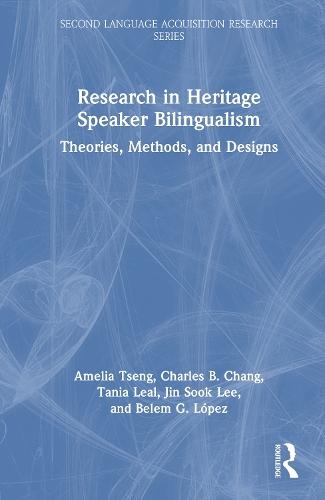
Research in Heritage Speaker Bilingualism...
Theories, Methods, and Designs
Hardback
$367.95 $294.45
Not in-store but you can order this
Teaching Languages with Screen Media...
Pedagogical Reflections
Paperback
$59.99
Not in-store but you can order this