Bargains! PROMOTIONS


"""Fischer expands our perspective of anti-communism temporally, shifting it to these late nineteenth-century roots, and deepens our understanding of it to contain clearly, and from its earliest origins, a laissez faire, open shop agenda. . . . This book will be welcomed and appreciated by those interested not only in the history of communism but also in understanding the limits of American politics in the twentieth century.""--American Communist History ""Fischer's sweep is broad; his results are impressive. Recommended.""--Choice ""Refreshingly original.""--New York Review of Books ""Fischer has produced a very original, well-researched and well-written account of how a relatively small but highly influential group of interlocking elites, including political and military intelligence officials, wealthy businessmen, members of 'patriotic' societies, and other conservatives, worked successfully to keep alive highly exaggerated fears of communism that had caused a national panic during the 1919-20 'red scare.'""--Robert Justin Goldstein, author of Political Repression in Modern America ""Spider Web turns out to be a well-researched and thoughtful interdisciplinary work that intertwiningly uses perspectives of history, political science, sociology, and media studies. . . . Fischer's research is extensive, and in many aspects pioneering. Not only does he sum up the previous findings on American anticommunism, but also adds new information and, more importantly, provides new analytical perspectives.""--Americana ""Nick Fischer makes a major contribution to the growing literature on American antisubversive organizations. Spider Web establishes, through rigorous and original research, that anticommunism was intimately connected with private and public networks that promoted antilabor laws, eugenics, and immigration restriction.""--Phillip Deery, author of Red Apple: Communism and McCarthyism in Cold War New York"
The Communist Manifesto
with an introduction by Yanis Varoufakis...
Paperback
$14.99
In Stock 😊
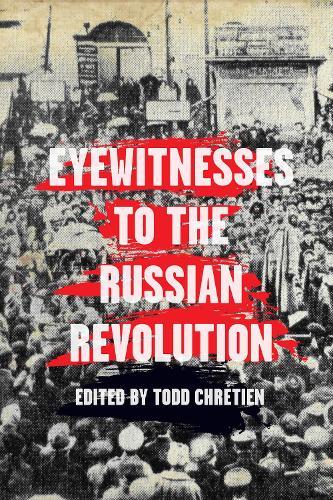
Eyewitnesses To The Russian Revolution...
Paperback
$53.95
Not in-store but you can order this