Bargains! PROMOTIONS


By Akmolfe, PhD, rooted with the Yoruba people in a more-than-human world, is the father to Alethea Aanya and Kyah Jayden Abayomi and the grateful life-partner to EJ, as well as a son and a brother. A widely celebrated international speaker, posthumanist thinker, poet, teacher, self-styled ""trans-public"" intellectual, and essayist, he is the author of two books: These Wilds Beyond Our Fences: Letters to My Daughter on Humanity's Search for Home and We Will Tell Our Own Story: The Lions of Africa Speak! (with Professors Molefi Kete Asante and Augustine Nwoye). Akmolfe is the visionary founder of The Emergence Network, a planet-wide networking project and inquiry at the edges of the Anthropocene that seeks to convene new kinds of responsivities, sensuous solidarities, and experimental practices for a posthumanist parapolitics. Akmolfe currently lectures at Pacifica Graduate Institute in California, and was recently appointed the Hubert Humphrey Distinguished Professor of American Studies at Macalester College in Minnesota (beginning in fall 2025). He is also the inaugural Global Senior Fellow of the Othering & Belonging Institute at the University of California (Berkeley); the inaugural W. E. B. Du Bois Scholar in Residence for Trans-Public Intellectualism at the Schumacher Center for a New Economics; and the inaugural Scholar in Residence for the Aspen Institute. Akmolfe lives between Chennai, India and Great Barrington, Massachusetts with his family. He considers Brazil to be his spiritual home. Eden Pearlstein is a multimedia language-artist and cofounder of Ayin Press. He is the author of Nothing Is for Everyone: Poems, a creative contributor to SURVIVA: A Future Ancestral Field Guide by Cannupa Hanska Luger, and coauthor/editor of the chapbook In/Flux: On Influence, Inspiration, Transmission, and Transformation. He lives in Philadelphia with his wife and two children. Krista Dragomerdrawings is included in Dr. Beatrice Marovich's Sister Death: PoliticalTheologies for Living and Dying and in the forthcoming anthology For The Wild.
“Báyò Akómoláfé is a philosopher who is pushing us to think outside of every narrative we take for granted. In this text, he guides us to reconsider how we relate to the world—and to internalize the fact that earth and all of nature are alive, relating to us. Selah is an ancient Indigenous orientation, poured through Báyò’s trickster poetry to make for a fresh agitation.” —adrienne maree brown, author of Pleasure Activism and Loving Corrections “There’s a story about Borges, the great mischievous Argentinian writer, reading several books of Martin Buber and then discovering to his surprise that Buber was a philosopher. Why the surprise? Because Buber didn’t make arguments. ‘Arguments convince nobody,’ Borges explained. ‘But when something is merely said or—better still—hinted at, there is a kind of hospitality in our imagination.’ Báyò Akómoláfé is—among much else—a philosopher, but what I find in his work is this kind of imaginative hospitality. It opens itself up to everything that goes missing from our arguments, everyone who goes missing, all the ones who stray from the straight way and learn to dance with loss, to travel like rumors, to elude cognitive capture. Selah is a book full of invitations to the unmarked paths that branch off from the highway of progress. There’s mischief waiting down those paths, and monstrous grace, and a poetry that unsettles all the assumptions we didn’t even know we were making.” —Dougald Hine, author of At Work in the Ruins “Like the carpenter ant sporulating cordyceps mushrooms from its forehead, one has the sense that Báyò Akómoláfé’s insights might be dangerous to channel—that we are reading the final, perhaps fatal, fungal flourish of entities simultaneously too microscopic and too macrocosmic for our human organism to ever comprehend. These blessings do not offer protection. They offer divine infection—with mystery, with microbial anarchy, with revelry, and, most importantly, with a widened capacity for gardening in the ecotones of paradox. In a moment where there are no easy answers and no right side, Akómoláfe shows us how to play in the fertile interstices between species, and how to pray in the fertile compost heap between sterile ideologies.” —Sophie Strand, author of The Body Is a Doorway and The Madonna Secret “As teetering border walls create glorious patterns of cracks and fissures in the architectures of certainty and loss, Báyò sweeps away the panicked grief of the Anthropocene with delight at the ‘wondrous meanwhile’ in which the world turns itself inside out and our edges migrate to the center of things. I often wonder why brother Báyò keeps engaging with me, when I spend all my time teasing thought leaders, or disrupting seekers of knowledge. Then I read Selah and understand that ‘when wisdom becomes too full of itself, it needs the intervention of the stupid,’ and that ‘play is the poetics of the sideways.’ Thus, as a fool/trickster, I am compelled to blurt out some spoilers and ruin the breathless anticipation of earnest readers: every standpoint has closets full of skeletons; the self is a multi-species collective; morality captures ethics just as games capture play; your identity, voice, and lived experience are artifacts of an illusory order imposed by the powerful; and empire seeks to colonize the world, but instead the colonized creolize the world. Each story and insight in Selah inducts us into the Möbius strip of brother Báyò’s logic, compelling us not to seize on any of his words as truth, but to use his tools of peripheral cognition to follow the cracks and wounds of this world, to fully inhabit our entanglement.” —Tyson Yunkaporta, founder of the Indigenous Knowledge Systems Lab at Deakin University “In the ‘right to opacity,’ the com-post of post-activism gathers its more-than-human energies toward a politics of defamiliarization. Where blackness is how the cracks trouble the edifice of justice presupposed, bewilderment is cultivated. In care for how touch shifts the conditions of an earthly relation, in the tenderness of a grace ‘that allows something different,’ the struggle to ask the ‘right’ questions dances. No maps are provided in this lyrical unmaking of the time of white capture where ‘to be embodied is to be beside oneself.’” —Dr. Erin Manning, Research Chair in Speculative Pragmatism, Art, and Pedagogy at Concordia University
Black Climates
notes on Race, our Environment,...
Hardback
$45
Forthcoming
You can preorder this
Design Adventures
Discover A Creative Framework for...
Paperback
$32.99
Forthcoming
You can preorder this
The Ocean Hero Handbook
Simple things you can do to save...
Paperback
$19.99
Forthcoming
You can preorder this
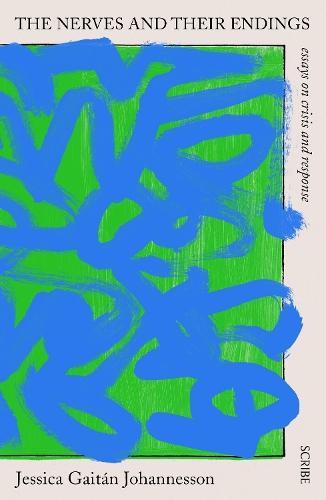
The Nerves and Their Endings
essays on crisis and response
Paperback
$24.99
Forthcoming
You can preorder this
Living with Water
Everyday Encounters and Liquid Connections...
Hardback
$195
Forthcoming
You can preorder this