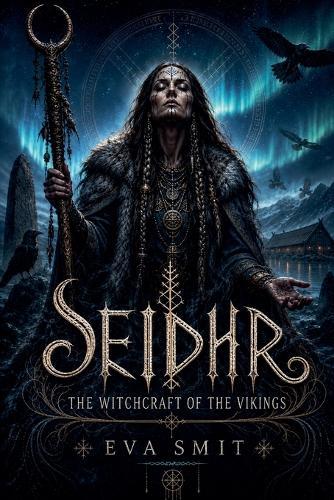
Before the Viking world became legend, there were women who sat above the firelight and spoke with fate.
They carried staffs. They sang to spirits. They entered trance. They called the dead. They read the hidden pattern of the world.
They were the völur, the feared and honoured seeresses of the Norse world, and their art was seidhr, the witchcraft of the Vikings.
SEIDHR: The Witchcraft of the Vikings uncovers one of the most mysterious spiritual traditions of the Viking Age, a practice bound to prophecy, trance, fate, death, spirit calling, divine power, and the forbidden knowledge of the unseen world.
In the sagas, seidhr was powerful enough to disturb the boundaries of gender, honour, and the sacred. Odin himself was said to have practiced it, though the old stories tell us that this magic carried danger and shame when used by men. Freyja, goddess of beauty, desire, battle, and the dead, was remembered as the divine mistress of seidhr, the one who brought this art into the world of the gods.
This is the hidden world of the staff carrying prophetess, the woman who entered halls during famine, crisis, sickness, and fear. She was welcomed, watched, paid, honoured, and dreaded. She could reveal the future, call spirits, bless, curse, heal, and expose the threads of wyrd.
Inside this book, you will discover:
The real meaning of seidhr, and why it stood apart from other Norse magical practices The völva's place in Viking society, as seeress, ritual specialist, outsider, and feared guest Why Odin's use of seidhr mattered, and why it unsettled Norse ideas of power and masculinity The connection between Freyja, the Vanir gods, and Viking witchcraft The staff, the high seat, and the spirit calling songs used in seidhr ceremonies The role of trance, prophecy, death, and fate in Norse belief The archaeology of possible völva graves, staffs, ritual objects, charms, and burial evidence The links between Norse magic, Sámi practice, and northern spirit traditions How Christianity condemned, reshaped, and preserved memories of seidhr The survival of Viking witchcraft in folklore, modern Paganism, and popular imagination
This is the world behind the familiar image of the Viking Age, beyond swords, ships, raids, and kings.
A world of seers.
A world of spirits.
A world where fate could be heard in song, read in signs, and summoned from the dark.
The woman with the staff knew what even kings feared to ask.