PRIZES to win! PROMOTIONS


Robert J. Miller is Willard H. Pedrick Distinguished Research Scholar and Professor of Law at the Sandra Day O'Connor College of Law, Arizona State University, USA, where he also serves as Faculty Director of the Rosette LLP American Indian Economic Development Program. He is also Interim Chief Justice for the Pascua Yaqui Tribe Court of Appeals and sits as a judge for other tribes. A citizen of the Eastern Shawnee Tribe, Miller is an expert on Federal Indian Law, American Indians and international law, American Indian economic development, Native American natural resources, and Civil Procedure. Adam Crepelle is a professor at Loyola University Chicago School of Law. He is a co-founder of the Gulf States American Indian Chamber of Commerce and served as a delegate in the inaugural United States-Australia Indigenous Trade Mission in 2022. He has also been named one of the National Center for American Indian Enterprise Development’s ""40 under 40."" A citizen of the United Houma Nation, he has published over a dozen articles relating to tribal economic development.
From a tribal leader's perspective, Miller and Crepelle's Reservation Capitalism is a crucial blueprint for tribal leaders working to build strong, diverse reservation economies. The book powerfully demonstrates how leveraging our sovereignty—our greatest asset—can create lasting prosperity for our people. Reservation Capitalism is essential reading for anyone interested in working with tribes. * David Sickey, Chairman of the Coushatta Tribe of Louisiana * Miller and Crepelle's Reservation Capitalism is a manifesto of big-picture thinking about the problem of the 21st century for Indian country--diversifying and growing reservation economies. Miller and Crepelle bring together law, history, economics, and culture in a brilliant work that speaks to Native and non-Native policymakers and lawyers as much as it does to scholars. * Matthew L. M. Fletcher, Harry Burns Hutchins Collegiate Professor of Law, University of Michigan Law School *
Improving Nutritional Outcomes
Connecting the Dots through Grounded...
Hardback
$398.95 $319.42
Forthcoming
You can preorder this
Human Rights Economies and Subnational...
Theory and Practice
Hardback
$398.95 $319.42
Forthcoming
You can preorder this
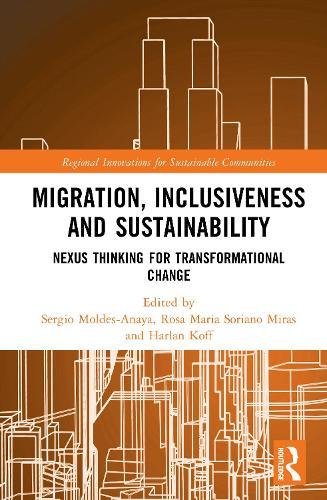
Migration, Inclusiveness and Sustainability...
Nexus Thinking for Transformational...
Hardback
$398.95 $319.42
Forthcoming
You can preorder this
Living by the Gun in Chad
Combatants, Impunity and State Formation...
Paperback
$39.99
Forthcoming
You can preorder this