Bargains! PROMOTIONS


Leo Van Arragon is an independent scholar whose current academic research in the politics of religious literacy draws on his thirty-seven-year career as a professional educator, both as a teacher and a school principal. He did extensive work in curriculum development, where he specialized in the social sciences and religion, and in political advocacy on behalf of privately funded faith-based schools in Ontario.
""Van Arragon rejects the common understanding that religion is a private affair, or that 'public' schools are religiously neutral. Arguing instead that all schools advance some vision of the good life and that religion is of public interest, he creates space for religious education for its own sake. Religious education contributes to civics and character education but cannot be reduced to either because religious literacy is a way of reading the world and living into one's most fundamental commitments of the head, heart, and hands."" --Margie Patrick, Associate Professor of Education, King's University, Edmonton ""This book is the fruit of a deep commitment to education practice, scholarship on religion, and the well-being of students navigating a complex and uncertain world. . . . The questions raised are essential for everyone concerned about the purpose of education in times of deepening division, violence, and environmental collapse."" --Catherine Holtmann, Professor of Sociology, University of New Brunswick ""Carefully and rigorously researched, Reflections on Religious Literacy is a mind-expanding journey toward reshaping our thinking about religion and literacy, education, and the public square."" --Dirk Buursma, Senior Editor-at-Large ---delete this line and above excerpts--- ""Our world is incredibly religiously diverse, from organized traditions to individuals who prefer science, nature, or atheism to those who find themselves somewhere in between. Religion education programs around the world reflect that diversity, to the point of confusion and marginalization in education. Into this breach steps Leo Van Arragon, with his bold assertion that religious education, and specifically religious literacy, is essential to education. After methodically defining and analyzing the terms 'religion' and 'literacy, ' Van Arragon argues that religion is an 'interpretive screen' that enables humans--both individually and collectively within institutions, principles, rituals, and more--to make sense of the world and construct meaning. It is an embodied way of knowing, full of affects, experiences, narratives, rationality, and an element of wisdom. Religious literacy enables citizens to learn about themselves, each other, and the world, critically evaluating the world in its complexity and discussing how to live together well. Van Arragon rejects the common understanding that religion is a private affair, or that 'public' schools are religiously neutral. Arguing instead that all schools advance some vision of the good life and that religion is of public interest, he creates space for religious education for its own sake. Religious education contributes to civics and character education but cannot be reduced to either because religious literacy is a way of reading the world and living into one's most fundamental commitments of the head, heart, and hands."" --Margie Patrick, Associate Professor of Education, King's University, Edmonton Attn MATT and DESIGNER: All ENDs to FM. Please use TOP THREE EXCERPTS on back cover. Please DELETE these excerpts AND THE LINE BENEATH before publication. ""Van Arragon rejects the common understanding that religion is a private affair, or that 'public' schools are religiously neutral. Arguing instead that all schools advance some vision of the good life and that religion is of public interest, he creates space for religious education for its own sake. Religious education contributes to civics and character education but cannot be reduced to either because religious literacy is a way of reading the world and living into one's most fundamental commitments of the head, heart, and hands."" --Margie Patrick, Associate Professor of Education, King's University, Edmonton ""This book is the fruit of a deep commitment to education practice, scholarship on religion, and the well-being of students navigating a complex and uncertain world. . . . The questions raised are essential for everyone concerned about the purpose of education in times of deepening division, violence, and environmental collapse."" --Catherine Holtmann, Professor of Sociology, University of New Brunswick ""Carefully and rigorously researched, Reflections on Religious Literacy is a mind-expanding journey toward reshaping our thinking about religion and literacy, education, and the public square."" --Dirk Buursma, Senior Editor-at-Large ---delete this line and above excerpts--- ""Our world is incredibly religiously diverse, from organized traditions to individuals who prefer science, nature, or atheism to those who find themselves somewhere in between. Religion education programs around the world reflect that diversity, to the point of confusion and marginalization in education. Into this breach steps Leo Van Arragon, with his bold assertion that religious education, and specifically religious literacy, is essential to education. After methodically defining and analyzing the terms 'religion' and 'literacy, ' Van Arragon argues that religion is an 'interpretive screen' that enables humans--both individually and collectively within institutions, principles, rituals, and more--to make sense of the world and construct meaning. It is an embodied way of knowing, full of affects, experiences, narratives, rationality, and an element of wisdom. Religious literacy enables citizens to learn about themselves, each other, and the world, critically evaluating the world in its complexity and discussing how to live together well. Van Arragon rejects the common understanding that religion is a private affair, or that 'public' schools are religiously neutral. Arguing instead that all schools advance some vision of the good life and that religion is of public interest, he creates space for religious education for its own sake. Religious education contributes to civics and character education but cannot be reduced to either because religious literacy is a way of reading the world and living into one's most fundamental commitments of the head, heart, and hands."" --Margie Patrick, Associate Professor of Education, King's University, Edmonton ""This book is the fruit of a deep commitment to education practice, scholarship on religion, and the well-being of students navigating a complex and uncertain world. In advocating for the inclusion of religious literacy as a component of critical thinking, Leo importantly unmasks the issues of power operating in all education systems, secular and religious alike. The questions raised are essential for everyone concerned about the purpose of education in times of deepening division, violence, and environmental collapse."" --Catherin
Curriculum-Based Assessment for...
Using Data to Individualize Instruction...
Paperback
$89.99
Not in-store but you can order this
Learning That Transfers
Designing Curriculum for a Changing...
Paperback
$86.99
Not in-store but you can order this
Physical and Spiritual Experience...
Therapeutic and Artistic Aspects...
Paperback
$50.99
Not in-store but you can order this
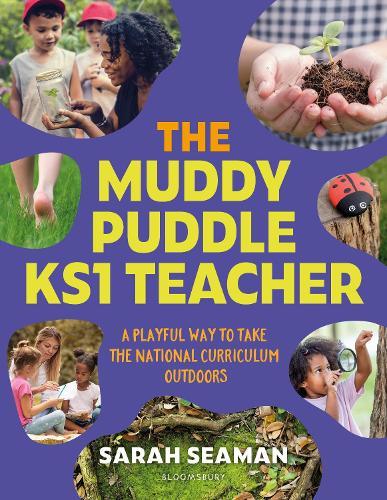
The Muddy Puddle KS1 Teacher
A playful way to take the National...
Paperback
$42.99
Not in-store but you can order this