PRIZES to win! PROMOTIONS


Professor Askari has lectured and taught at several universities in India, Lebanon, Germany, Holland, Britain and the United States.Hasan Askari's works include The Experience of Religious Diversity - co edited with Professor John Hick, Spiritual Quest - An Inter Religious Dimension and Towards a Spiritual Humanism - A Muslim Humanist Dialogue (with Jon Avery), Alone to Alone: From Awareness to Vision, Seers & Sages (co-edited with David Bowen), Solomons Ring: The Life and Teachings of a Sufi Master, Inter-Religion to name but a few. His prominence in the field of Christian-Muslim encounter is noted by Kenneth Cragg, a pioneer and acknowledged authority in the area of Christian-Muslim relations: Few thinkers in contemporary Islam have so tellingly explored the issues of inter-religion or undertaken them as strong vocation. Hasan Askari holds a unique position in the search for unity of heart within the discrepancies, real or unreal, of religions in society."" Ṣadr al-Dīn Muḥammad ibn Isḥāq ibn Muḥammad ibn Yūnus Qūnawī [alternatively, Qūnavī, Qūnyawī, was a philosopher, and one of the most influential thinkers in mystical or Sufi philosophy. He played a pivotal role in the study of knowledge-or epistemology, which in his context referred specifically to the theoretical elaboration of mystical/intellectual insight. He combined a highly original mystic-thinker, Muḥyī al-Dīn Ibn 'Arabī (1165-1240 CE/560-638 AH), whose arcane teachings Qūnawī codified and helped incorporate into the burgeoning pre-Ottoman intellectual tradition, on the one hand, with the logical/philosophical innovations of Ibn Sīnā (Lat., Avicenna), on the other. Though relatively unfamiliar to Westerners, the spiritual and systematic character of Qūnawī's approach to reasoning, in the broadest sense of the term, has found fertile soil in modern-day Turkey, North Africa and Iran not to mention India, China, the Balkans and elsewhere over the centuries.
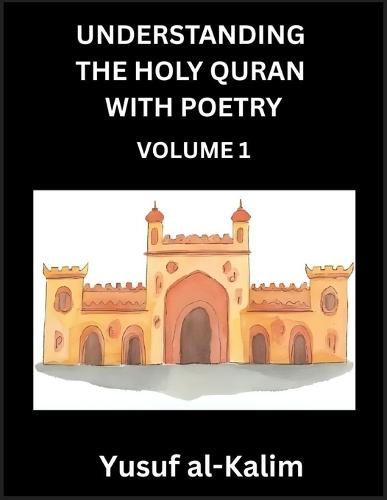
Understanding the Holy Quran with...
Part 1 - Poetic Journeys Through...
Paperback
$61.95 $52.34
Not in-store but you can order this
Vérités scientifiques dans le Coran...
Paperback
$34.95 $31.10
Not in-store but you can order this
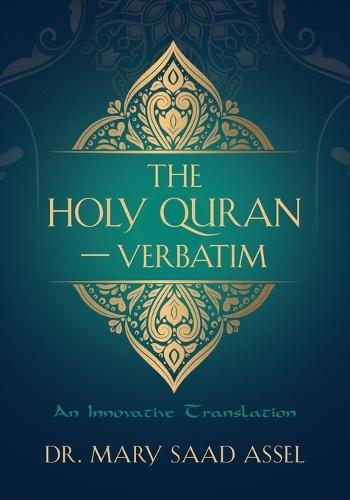
The Holy Quran - Verbatim
An Innovative Translation
Paperback
$46.95 $39.98
Not in-store but you can order this