Bargains! PROMOTIONS


Alexander Libman is professor of Russian and East European politics at the Freie Universität Berlin. Prior to that, he worked as professor of social sciences and East European studies at the Ludwig Maximilian University of Munich. His research interests focus on comparative authoritarian development in the post-Soviet Eurasia. His work appeared, among others, in the American Political Science Review, World Politics, British Journal of Political Science, Comparative Political Studies and Perspectives on Politics.
Unpredictability is encoded in the DNA of autocracy, but its implications are complex and not well understood. Drawing on an impressive synthesis of recent research and deep case studies from the Soviet Union, Russia and Kazakhstan, Alexander Libman demonstrates that unpredictability is not just a feature of autocracy; it is also a tool that leaders use to frustrate citizens and academic observers alike. Random Dictatorships: Unpredictability of Authoritarian Politics in Eurasia overflows with rich insights on autocracy and how we study it. It is required reading for anyone interested in the topic. -- Tim Frye, Columbia University, USA Alexander Libman, in his new and refreshingly epistemologically honest book, drawing from in-depth studies of several Eurasian dictatorships, underlines not only that the politics and policies in dictatorships are often random but also offers a theoretically grounded explanation for why the murkiness and occasional unpredictability of authoritarian politics is a built-in feature, not a bug. Random Dictatorships is a tour de force that manages to hit the sweet spot between the rigor and generalizability of comparative authoritarianism approach and the area studies' expert knowledge of how dictatorships really work. -- Alexander Baturo, author of The New Kremlinology: Understanding Regime Personalization in Russia
Imperial Incarceration
Detention without Trial in the Making...
Paperback
$81.95 $69.63
Not in-store but you can order this
The Armenian Genocide and Turkey...
Public Memory and Institutionalized...
Hardback
$180
Not in-store but you can order this
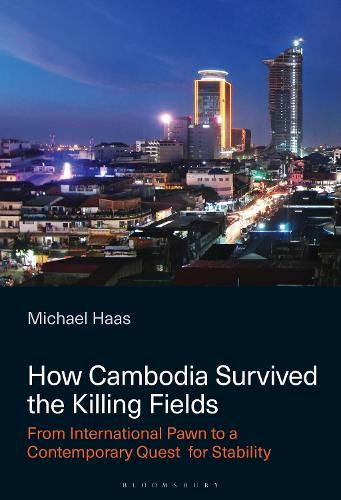
How Cambodia Survived the Killing...
From International Pawn to the Contemporary...
Hardback
$160
Not in-store but you can order this
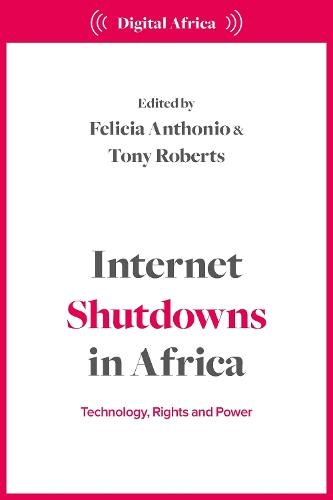
Internet Shutdowns in Africa
Technology, Rights and Power
Hardback
$130
Not in-store but you can order this
Whiteness In Puerto Rico
Translation at a Loss
Paperback
$59.99
Not in-store but you can order this