Bargains! PROMOTIONS


Sabu Thomas is a Professor and Director of the International and Interuniversity Centre for Nanoscience and Nanotechnology, Mahatma Gandhi University, Kerala, India. Professor Thomas is internationally recognized for his contributions to polymer science and engineering, with his research interests encompassing polymer nanocomposites, elastomers, polymer blends, interpenetrating polymer networks, polymer membranes, green composites, nanocomposites, nanomedicine, and green nanotechnology. His groundbreaking inventions in polymer nanocomposites, polymer blends, green bionanotechnology, and nano-biomedical sciences have significantly advanced the development of new materials for the automotive, space, housing, and biomedical fields. Prof. Isabelle Royaud has been a university lecturer in polymer physics and polymer science since 1990. In 2011, she joined the University of Lorraine, France after beginning her career at the University of Lyon. Since 2011 she has been a Professor at the EEIGM : European School of Material Science and Engineering, Nancy, France and has been a Researcher at the Institut Jean Lamour UMR CNRS 7198 Nancy, France. Her research interest includes polymer physic properties for synthetic polymers and biopolymers, relations between architecture/morphology and mechanical, electrical, vibrational properties of polymer and multimaterials, influence of ageing and morphology on molecular mobility and relaxational phenomena in polymer materials, molecular mobility at the interfaces of nanostructured systems, and in situ monitoring of plastic deformation in polymers at different scales using vibrational techniques, videometric tensile test, synchrotron radiation and broadband dielectric analysis. Dr. David Chapron has been an Associate Professor at LMOPS, Université de Lorraine since 2010. His current research interests include in-situ Raman spectroscopy, optical sensors, semi-crystalline polymers, and ferroelectric crystals. He has authored or co-authored more than 30 publications in international refereed journals and 2 book chapters and has supervised 7 PhD students. He is the team lead for ""Spectroscopy of Complex Materials"" at LMOPS and is scientific coordinator of the Spectroscopy platform of LMOPS, ERASMUS+ coordinator with UCLM University (Spain). He is an elected member of the board for the M4 division, organizer of 2 national scientific conferences, and an active reviewer for several international journals including the Journal of Raman Spectroscopy, Optical Materials, and the European Physical Journal. Dr. Marc Ponçot has been an Associate Professor in the Department of Materials at ENSMN, Université de Lorraine since 2010. His research activities are primarily focused on the physics, mechanics, and plasticity of materials. He has authored or co-authored 37 publications in international refereed journals and has 2 patents to his credit. He has supported 7 PhD Thesis (+4 in progress) and has participated as jury in 3 PhD Thesis and 1 HDR. He has delivered 15 keynote lectures as an invited speaker at international conferences. He is manager of the CNRS National Researchers Group PolyNano2 (consisting of around 56 French research teams). He is an elected member of the board of the M4 division, a member of the evaluation committee of calls for Projects Grande Région Young Researchers, and Project Leader of the Task “Steel/Polymer Composites of the Work Package “Innovative Materials of the Labex DAMAS 2 (2021‐2028).
Emerging Materials for Photodegradation...
Recent Developments and Future Prospects...
Hardback
$394.95 $315.59
Not in-store but you can order this
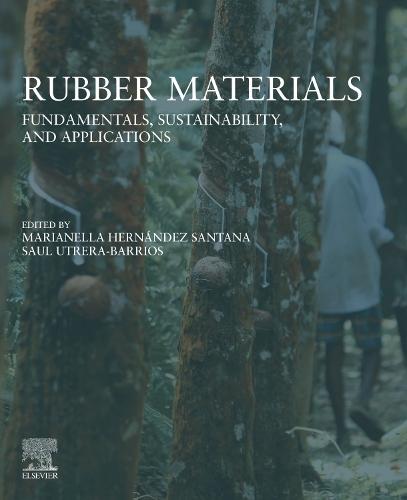
Rubber Materials
Fundamentals, Sustainability, and...
Paperback
$445.95
Not in-store but you can order this
Rehabilitation of Metallic Structural...
FRP Composites
Paperback
$563.95
Not in-store but you can order this
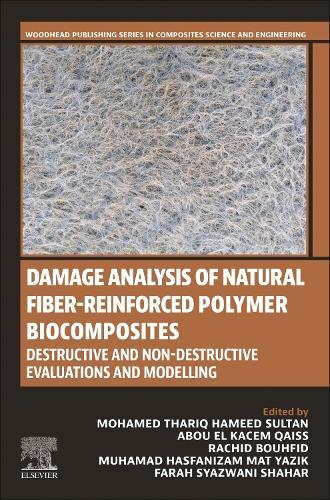
Damage Analysis of Natural Fiber-reinforced...
Destructive and Non-destructive...
Paperback
$465.95
Not in-store but you can order this
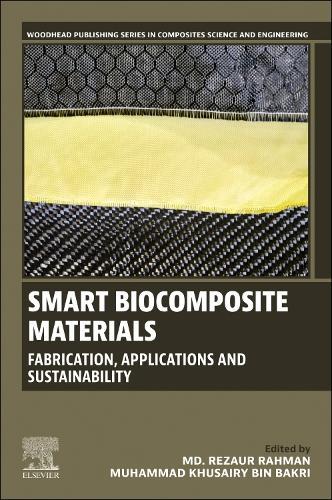
Smart Biocomposite Materials
Fabrication, Applications and Sustainability...
Paperback
$430.95
Not in-store but you can order this