PRIZES to win! PROMOTIONS


Wael B. Hallaq is the Avalon Foundation Professor in the Humanities at Columbia University. He is a leading authority in Islamic law, and has published widely on legal theory, Orientalism and the critical problems of modernity. His previous books include Restating Orientalism and The Impossible State.
'Hallaq has already authored definitive books on how Islamic civilisation articulated law and how both Western scholarship and many Islamist movements have grossly misunderstood Islamic law and the premodern state. Now this latest, fascinating volume draws on a career of expertise to bring these studies together, laying out how the Shariah and state fit together and should be understood today.' Jonathan A. C. Brown, author of Islam & Blackness 'Hallaq offers a much-needed corrective to the Orientalist narratives, which do not provide a viable foundation for historical inquiry nor serve as building blocks for new scholarship. In their place, he presents a panoramic account of constitutionalism and the separation of powers, giving readers a fine-grained perspective on the primacy of law in curbing, limiting, and guiding executive authority. Spanning the millennium from the tenth to the eighteenth century, Hallaq not only presents a historical account of constitutional practice but also offers a narrative infused with theoretical inquiry and multidimensional critique. The reader will appreciate the book’s explication of a Shariʿa-oriented, ulema-led mode of political thought in relation to recent scholarly interventions on the secular adab al-siyasa discourses of good governance in Islamic history.' Hayrettin Yücesoy, author of Disenchanting the Caliphate
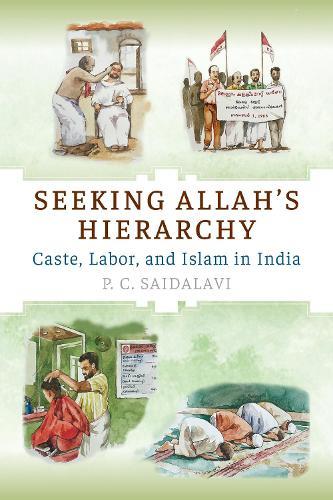
Seeking Allah's Hierarchy
Caste, Labor, and Islam in India...
Paperback
$104
Forthcoming
You can preorder this
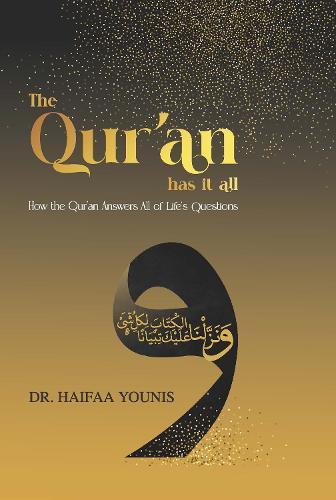
The Qur'an Has It All
How the Qur'an Answers All of Life's...
Hardback
$27.99
Forthcoming
You can preorder this
Understanding Salafism
Seeking the Path of the Pious Predecessors...
Hardback
$69.99
Forthcoming
You can preorder this