PRIZES to win! PROMOTIONS


Dr Andrea Delgado is a Research Scientist in the Physics Division and the Quantum Information Science Group at Oak Ridge National Laboratory. Her research focus is on quantum computing applications to high-energy physics. This work combines a scientific interest in extending our knowledge of the fundamental blocks of the universe and how they interact with each other and building better tools to analyze the data from large-scale particle physics experiments such as the LHC. Andrea’s research interests include developing data analysis tools for high-energy physics experiments, including machine learning and quantum computing. She received her Ph.D. from Texas A&M University. Dr Kathleen Hamilton is a Research Scientist in the Quantum Information Science Group at Oak Ridge National Laboratory. Her research covers many different aspects of NISQ-era quantum machine learning including designing new models for sequence prediction, quantum reservoir computing, using machine learning workflows to benchmark near-term quantum devices, and incorporating error mitigation into variational circuit training. She has been a member of the Program Committee for the International Conference on Neuromorphic Systems (ICONS) from 2019-2021, and the Algorithms Track for IEEE's 2020 Quantum Week. She received her Ph.D. from the University of California at Riverside, her M.S. from the University of New Hampshire, and her B.S. from Mary Washington College. She is a member of the American Physical Society and the Society of Industrial and Applied Mathematics.
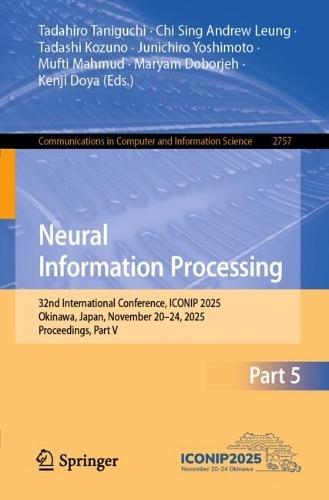
Neural Information Processing
32nd International Conference, ICONIP...
Paperback
$221.95 $177.72
Not in-store but you can order this
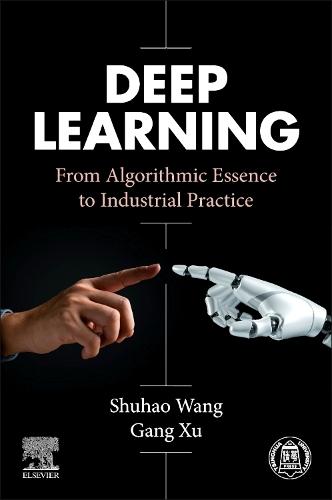
Deep Learning
From Algorithmic Essence to Industrial...
Paperback
$344.95
Not in-store but you can order this
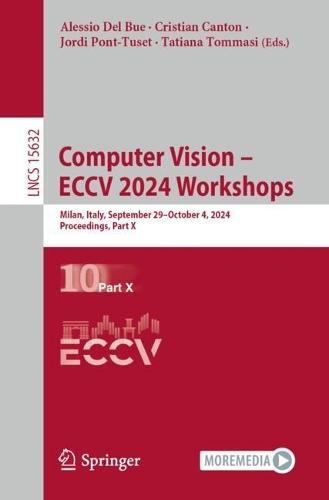
Computer Vision – ECCV 2024 Workshops...
Milan, Italy, September 29–October...
Paperback
$370.95 $296.98
Not in-store but you can order this
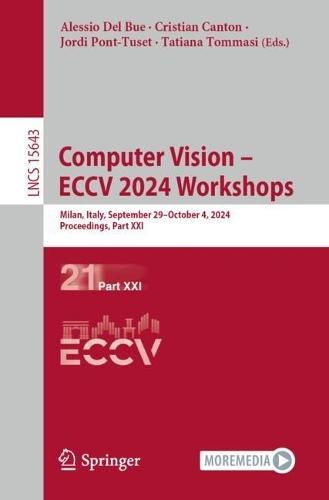
Computer Vision – ECCV 2024 Workshops...
Milan, Italy, September 29–October...
Paperback
$206.95 $165.78
Not in-store but you can order this