Bargains! PROMOTIONS


Dr. Peter Y. Lee holds a Ph.D. in Electrical Engineering from Princeton University. His research at Princeton focused on quantum nanostructures, the fractional quantum Hall effect, and Wigner crystals. Following his academic tenure, he joined Bell Labs, making significant contributions to the fields of photonics and optical communications and securing over 20 patents. Dr. Lee's multifaceted expertise extends to educational settings; he has a rich history of teaching, academic program oversight, and computer programming. Dr. Lee is currently on the faculty of Fei Tian College, New York. Dr. Ran Cheng earned his Ph.D. in Physics with a focus on theoretical condensed matter physics from the University of Texas at Austin. Following his doctoral studies, he furthered his inquiry into magnetic materials and nanostructures as a postdoctoral researcher at Carnegie Mellon University. He is now a faculty member at the University of California, Riverside, where he actively explores three core research domains: spintronics, topological materials, and low-dimensional quantum magnets. A recognized pioneer in the burgeoning field of antiferromagnetic spintronics, Dr. Cheng was honored with the DOD MURI award alongside a cadre of distinguished physicists, furthering advancements in this innovative domain. Dr. Huiwen Ji holds a Ph.D. in Chemistry from Princeton University. She is a materials chemist whose research spans solid-state functional materials, quantum materials, and energy-related materials. After appointments at the University of California, Berkeley and Lawrence Berkeley National Laboratory, she joined the University of Utah as a faculty member in Materials Science and Engineering. Her honors include an NSF CAREER Award.
Zlatko Minev Google Quantum AI; CIFAR; Formerly: IBM Quantum, Yale, and UC Berkeley A carefully structured guide to the core ideas of quantum algorithms, connecting foundational primitives to real application domains and helping readers build lasting intuition for quantum computational design. Omar Alnaseri (Jan) Adjunct Professor at DHBW, Germany; Researcher in Quantum Communication Systems and Quantum ML/AI; SMIEEE This is an excellent resource for a student or professional coming from a classical STEM background. It manages to be technically rigorous without being impenetrable. If you find standard texts like Nielsen & Chuang too dense for a first pass, this ""Scaffolding Approach"" provides the necessary rungs to climb that ladder of complexity. Steven Frankel Rosenblatt Professor of Mechanical Engineering, Technion - Israel Institute of Technology The one-stop resource for everything quantum computing. Whether you are developing new algorithms or exploring practical applications, this book has it all. True to the clear, signature style of the author's earlier titles, this latest installment brings complex concepts into sharp focus through masterful presentation. Naoki Yamamoto Professor, Department of Applied Physics and Physico-Informatics, Keio University, Japan The field of quantum algorithms is advancing at a very rapid pace, and it is not easy to learn enough to reach the current research frontier. However, with this textbook, readers can efficiently study a wide range of topics, from the fundamentals to state-of-the-art algorithms. I would recommend it as an excellent first introduction for anyone who wishes to pursue research in this field. Jaewan Kim National Distinguished Research Fellow, Korea Research Institute of Standards and Science (KRISS); Professor Emeritus, Yonsei University and Korea Institute for Advanced Study (KIAS) Professor Peter Y. Lee and his coauthors, who have been building the Quantum Information Science series through a carefully scaffolded approach, have now published the long-awaited third volume, Quantum Algorithms and Applications, following Quantum Computing and Information (Vol. 1) and Mathematical Foundations of Quantum Computing (Vol. 2). I have used the first volume in teaching quantum information science to a broad range of undergraduate students and have seen an overwhelmingly positive response. This new volume is exceptionally well designed, enabling students to acquire a broad and up-to-date understanding of quantum algorithms and their applications in a clear, systematic, and accessible manner. I expect that many future quantum computer programmers will learn the foundations of using quantum computers from this book.
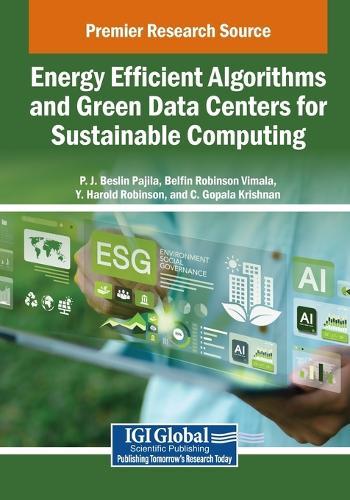
Energy Efficient Algorithms and...
Paperback
$625.95 $500.92
Not in-store but you can order this
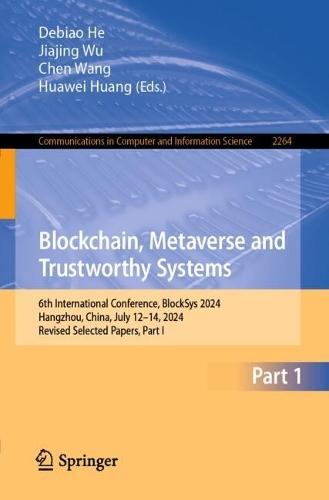
Blockchain, Metaverse and Trustworthy...
6th International Conference, BlockSys...
Paperback
$176.95 $141.94
Not in-store but you can order this
Class and Social Background Discrimination...
Mapping Inequality in the Digital...
Paperback
$61.95
Not in-store but you can order this
Combinatorial Optimization and Applications...
17th International Conference, COCOA...
Paperback
$370.95 $296.98
Not in-store but you can order this