Bargains! PROMOTIONS


Karie Schultz is a Leverhulme Early Career Fellow at the University of St Andrews where she is working on a project about early modern British and Irish student migration. She completed her PhD at Queen’s University Belfast in 2020, followed by a Rome Postdoctoral Fellowship at the British School at Rome. She has research interests in the intellectual history of early modern Britain and Europe, focusing specifically on connections between political thought and theology. She has also published widely on Scottish intellectual history, university education and the Catholic mission.
Seventeenth-century Scotland has often been dismissed as an intellectual backwater, but Karie Schultz’s scintillating book documents the sophistication and cosmopolitanism of its political thinkers. Encompassing Covenanters and royalists, and exploring Calvinist engagement with Catholic theorists, Schultz provides a more subtle account of the ‘secular’ and ‘religious’ dimensions of Reformed politics. This book deserves a wide readership among scholars of the British Revolutions, Protestant political thought, and early modern intellectual history. -- John Coffey, University of Leicester A well-sourced, informative read on the different ecclesiological and political perspectives underlying the Scottish Revolution. -- James Clark * The North American Anglican * A valuable contribution to the scholarship of religious and political ideas in early modern Scotland. -- James Morrison, Union Theological College Belfast * Studies in Puritanism and Piety * Provides an in-depth, nuanced examination of a part of early modern European intellectual history and lays the groundwork for better understanding how, only a century later, the Scottish Enlightenment could bloom. -- J. J. Butt, Emeritus, James Madison University * CHOICE * It is a testament to the author that one is left wondering why no one has done this sort of analysis before. It takes a unique skill set to be able to offer an analysis of such a wide range of pan-European scholarship and to then understand how it related to the constitutional crises that gripped Britain and Ireland in this period. -- Chris R. Langley, The Open University * Scottish Church History *
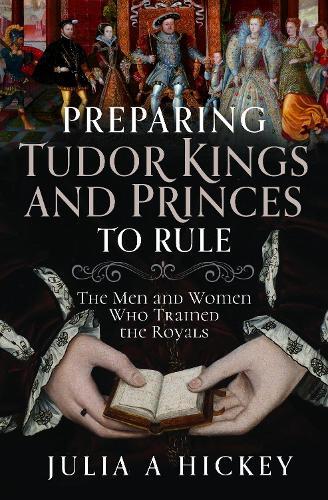
Preparing Tudor Kings and Princes...
The Men and Women Who Trained the...
Hardback
$80
In Stock 😊