PRIZES to win! PROMOTIONS


Luis Cuadros-Rodríguez is tenured full Professor of Analytical Chemistry at the University of Granada, Spain. He has worked in the field of Chemometrics, Chemical Metrology and Qualimetrics for many years. His focus is on developing protocols to optimize and validate analytical processes and methods. The authentication of olive oil was the main matter of his research, looking for analytical methods which can detect frauds in this 'gold' liquid. As a result, many innovative methodologies were published, most of them combining chemometrics and chromatography to get highly reliable results. In particular, he has contributed to lay down the basis of chromatographic fingerprinting methodology as a tool of major relevance in the field of food authentication. In addition, his research team has recently proposed a strategy to make chromatographic signals independent of the instrument itself or its state of maintenance, which has been termed 'instrument-agnostization'. Ana María Jiménez-Carvelo is a postdoctoral researcher at the University of Granada, Spain since 2018. Her research is focused on the application of chemometrics to the chemical authentication of food, using the fingerprinting methodology applying chromatographic (GC and LC) and spectrometric (IR, Raman) techniques. Her current research aims at i) improving and developing innovative fast-analytical methods to quality control of food, as well as to minimize the use of solvents using the fingerprinting methodology, and (ii) exploring the application of chemometric/data mining algorithms on data obtained by advanced analytical techniques in order to assess the authenticity of food products without the need to identify any specific compound. In these lines she has played an important role in developing new multivariate analytical methods of classification and quantification in analytical food chemistry, especially in the olive oil field. Jose M. Andrade-Garda is a full professor of Analytical Chemistry at the University of A Coruña, Spain since 2011. During his Ph.D. he worked in a refinery as a quality control technician. Currently his main interests are on multivariate data analysis in the environmental and petrochemical fields, mainly IR applications to speed quality control procedures in several manufacturing environments. He has also contributed to novel applications of multivariate modelling (in particular, PLS) to atomic spectrometry. At present, he is focused on microplastics analysis in several environmental matrices and their subsequent spectral identification.
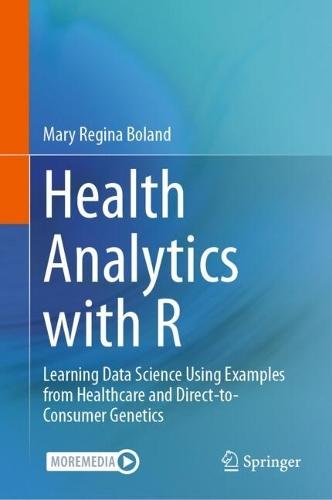
Health Analytics with R
Learning Data Science Using Examples...
Hardback
$251.95 $201.58
Not in-store but you can order this
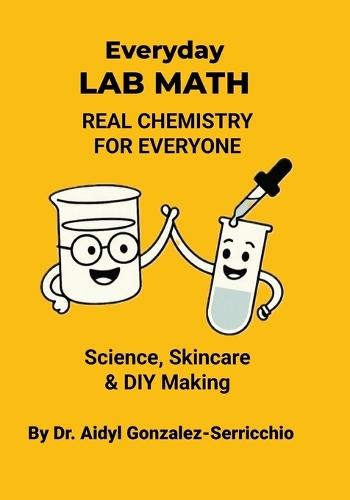
Everyday Lab Math
Real Chemistry for Everyone - Science,...
Paperback
$18.95
Not in-store but you can order this
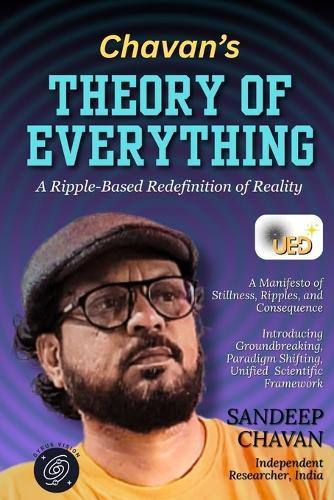
Chavan's Theory of Everything
A Ripple-Based Redefinition of Reality...
Paperback
$83.95 $71.39
Not in-store but you can order this
The Sounds of Life
How Digital Technology Is Bringing...
Hardback
$59.99
Not in-store but you can order this