Beat the rise! Delivery fees are going up soon.


Héctor Cardona-Reyes , Ph.D., earned his Doctorate in Computer Science from the Juárez Autonomous University of Tabasco (Mexico), where he developed computational methods for the production of interactive environments focused on rehabilitation. He also holds a Master's and a Bachelor's degree in Computer Science from the Autonomous University of Aguascalientes. He is currently a Research Professor at the Center for Research in Mathematics (CIMAT), Zacatecas Unit, assigned by SECIHTI Mexico. He teaches in the Master's Program in Software Engineering and the Master's Program in Science with a specialization in Robotics. His main research areas include human-computer interaction, immersive environments applied to health and education, virtual reality, and software engineering. Dr. Cardona-Reyes has published extensively in indexed scientific journals such as IEEE RITA, Universal Access in the Information Society, and Computers, Informatics, Nursing, as well as in book chapters published by Springer and IGI Global. He has served as proceedings editor for international conferences (CEUR-WS volumes) and has supervised multiple master's and doctoral theses on topics related to educational technologies and virtual environments. His recent work focuses on the development of immersive and inclusive learning ecosystems and the assessment of their impact in formal and informal educational contexts. Dr. Klinge Orlando Villalba-Condori holds a Ph.D. in Educational Sciences from the Universidad Nacional de San Agustín de Arequipa, Peru. He also earned a Master’s degree in Educational Management and a specialization in Systems Engineering from the same institution. Dr. Villalba-Condori is currently a university professor and researcher affiliated with various national and international institutions, contributing to both undergraduate and postgraduate education. His academic work focuses on the integration of STEAM (Science, Technology, Engineering, Arts, and Mathematics) into education, the development of computational thinking, and the use of emerging technologies to improve learning processes. He has participated in advanced research stays and training programs at globally recognized institutions including Harvard University, the University of Helsinki, Nanyang Technological University, and the University of Salamanca. Dr. Villalba-Condori has authored over 50 peer-reviewed articles indexed in Scopus and Web of Science, covering topics such as educational technology, machine learning in health, learning analytics, and inclusive STEM education. In addition to serving as a guest editor for special issues in indexed journals, he has contributed to several book chapters and authored textbooks addressing digital literacy and didactic strategies in science and mathematics education. Dr. Miguel Ángel Ortiz Esparza holds dual Ph.D. degrees—one in Computer Science from the Inter-institutional Doctorate in Computer Science (PNPC) and another in Education Management from the Tecnológico de Estudios Superiores de Naucalpan, Mexico. He also holds a postdoctoral degree in Software Engineering from the Center for Research in Mathematics (CIMAT), Zacatecas Unit, supported by SECIHTI, Mexico. His research has focused on inclusive digital ecosystems, human-computer interaction, and the design of virtual reality environments for improving mathematical competencies in primary education. Dr. Ortiz Esparza currently serves as a research professor at the Autonomous University of Aguascalientes and teaches across multiple institutions, including the Instituto Tecnológico de Estudios Superiores de Monterrey (ITESM), Universidad Panamericana, and Tecnológico Universitario de Aguascalientes. His teaching spans courses in web and mobile development, artificial intelligence, databases, and software engineering. Dr. Ortiz Esparza has authored numerous publications on inclusive technologies, augmented and virtual reality for education, and the development of software tools to support learners with cognitive challenges. His work bridges the gap between engineering and pedagogy, contributing significantly to the design of accessible learning environments in Latin America.
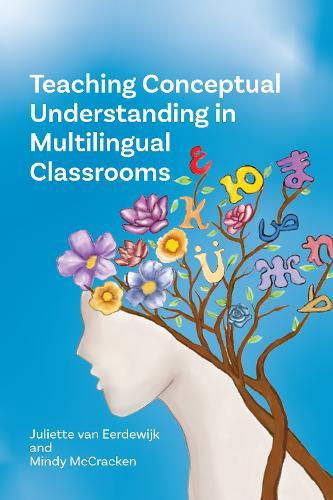
Teaching Conceptual Understanding...
Hardback
$354.95 $284.02
Not in-store but you can order this
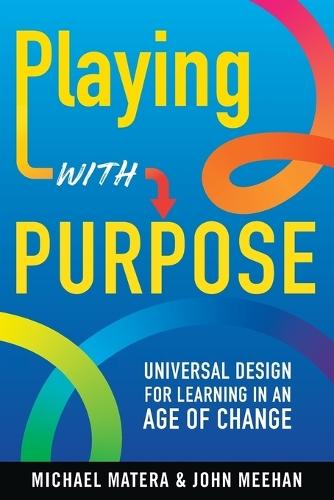
Playing with Purpose
Universal Design for Learning in...
Paperback
$45.95 $39.02
Not in-store but you can order this
Aiming for Diversity
Inclusive and Exclusive Logics on...
Paperback
$74.95
Not in-store but you can order this
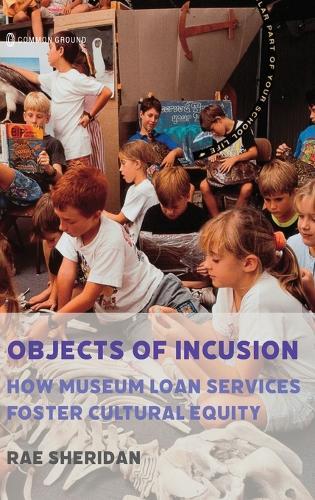
Objects of Inclusion
How Museum Loan Services Foster...
Hardback
$177.95 $151.37
Not in-store but you can order this
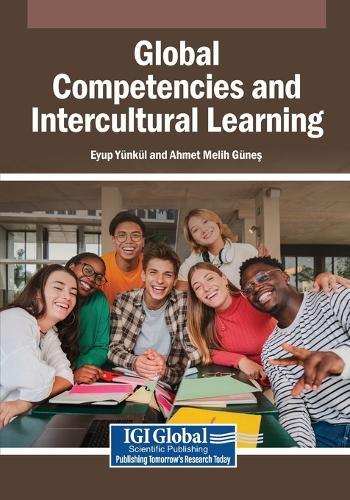
Global Competencies and Intercultural...
Paperback
$274.95 $220.29
Not in-store but you can order this
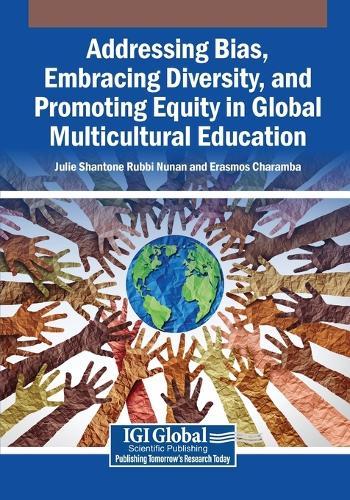
Addressing Bias, Embracing Diversity,...
Paperback
$298.95 $239.44
Not in-store but you can order this