Bargains! PROMOTIONS


Stephen Lee Naish is a British-born writer, visual artist, and author of several books of nonfiction. Steve's work has appeared in Aquarium Drunkard, Film International, The Quietus, Archetype, Dirty Movies, Drunk Monkeys, Cosmonaut, Albumism, and other online and in-print journals and zines. He lives in Ontario, Canada.
'Post-Catastrophe Film is a serious engagement with how the end of the world is represented in science fiction. Stephen Lee Naish's analysis asks us to consider what catastrophic films are trying to tell us about our contemporary moment, underneath the spectacle and the rubble. From insistences on carrying on with daily life, indulging in individualist fantasies of frontiersmanship, escaping sacrifice zones, witnessing the slow degradation of everything, to the helpless yearning for heroic intervention. Naish asks us to confront our shared exposure and consider what we have to collectively lose – or gain.' -- Robert E. Kirsch, co-author of Be Prepared: Doomsday Prepping in America 'A fascinating account of what it means that the world may be ending in a smoky and damp whimper, not a Hollywood bang. Deft and provocative criticism that helps us see our moment!' -- Bill McKibben, author of The End of Nature and Here Comes the Sun 'Stephen Lee Naish’s Post-Catastrophe Film compellingly exposes an array of real-life concerns veiled in the morbid fantasies of apocalyptic cinema, focusing on the immediate aftermath of a global event, before new social structures and rules for living have emerged. Naish shows how deeply film and our lived realities are intertwined, noting that the pandemic nearly brought the apocalypse to our ability to dream through the cinema itself. He emphasizes how this mythmaking machine has persevered in cognitively mapping scenarios of global environmental destruction as well as presenting anxious viewers with ways of envisioning alternative modes of being before post-catastrophe becomes our reality the way post-modernity, post-humanism and post-truth already have.' -- Anil Narine, Author, and Editor of Eco-Trauma Cinema (Routledge, 2015) 'In an era of pervasive polycrisis, in between large-scale disaster and post-apocalyptic films, Stephen Lee Naish looks at popular post-catastrophe films in the Netflix stream to distill their narrative elements and interpret their significance. He contends that these science fiction films are the ‘realism’ we need for our collective imagination and the survival of humankind. He discusses an array of quasi-prescient films that represent a perilous world with glimpses of ‘alternative futures.’ These films entertain ‘unthinkable’ events that not only run counter to conservative denial and rejection of ecosystem breakdown, they also present bleak scenarios and glimmers of hope for our consideration that may bypass far right vision of disaster capitalism, a barbarous future, and supremacist survivalism on a wrecked earth.' -- Bob Hanke, independent scholar and author
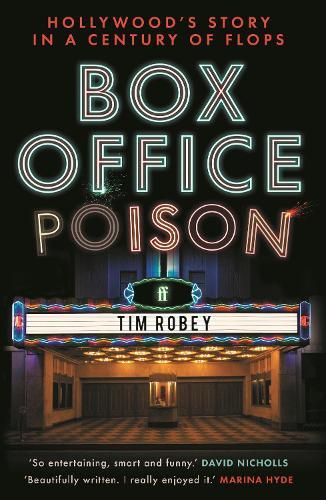
Box Office Poison
Hollywood’s Story in a Century of...
Paperback
$24.99
Not in-store but you can order this