Bargains! PROMOTIONS


KELVIN T. ERICKSON is Associate Professor of Electrical Engineering at the University of Missouri-Rolla. JOHN L. HEDRICK is President of Automation and Control Technologies, Inc. in St. Louis, Missouri. Combined, they have 50 years' experience in computer-based plant-control technology.
'Mac Ginty's question - why do so many peace processes fail? - is the right one to ask. His analysis and prescriptions about necessary changes in peacemaking are likely to make a very significant impact on the discussion on peace processes.' - Professor John Darby, Kroc Institute for International Peace, University of Notre Dame, USA 'This is a very well-informed seminal, sceptical monograph which asks why 'peace' is so elusive? Its timely revisionist treatise constitutes competition for Mark Duffield, Will Reno and Co!' - Professor Tim Shaw, Director of the Institute of Commonwealth Studies, University of London, UK '[T]his is the first book of importance which attempts to situate the practices of 'peace' within a critical and comparative perspective. The author pulls few punches. Peace - he argues - rarely delivers on what it promises. And it is hardly ever about reconciliation. This is the tough, welcome, and necessary message delivered by Roger Mac Ginty in this path-breaking book. An indispensable volume that is bound to shape all future discussion on the subject.' - Professor Michael Cox, London School of Economics and Political Science, UK '[A] major addition to a field that has attracted much recent public and specialist attention - that of what happens after the guns fall silent...The book will be of great interest to those interested in post-conflict violence. Mac Ginty brings a much needed perspective that is both ethically sound and also eminently pragmatic.' - Professor Andrew Williams, University of Kent, UK
Intelligent Simulation
37th China Simulation Conference,...
Paperback
$221.95 $177.72
Not in-store but you can order this
Intelligent Computing on IoT 2.0,...
Paperback
$104.95 $83.78
Not in-store but you can order this
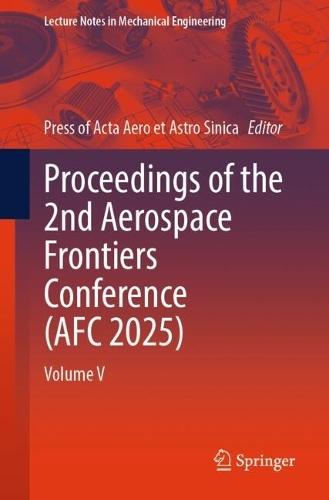
Proceedings of the 2nd Aerospace...
Volume V
Paperback
$728.95 $583.25
Not in-store but you can order this
Intelligent Systems and Industrial...
Paperback
$123.95 $99.47
Not in-store but you can order this
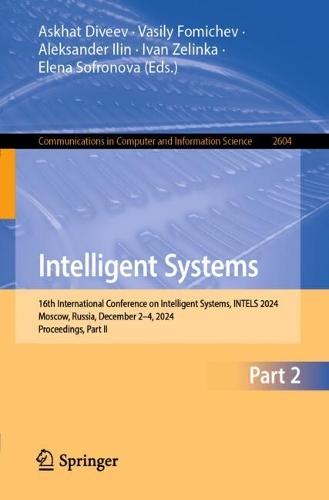
Intelligent Systems
16th International Conference on...
Paperback
$221.95 $177.72
Not in-store but you can order this
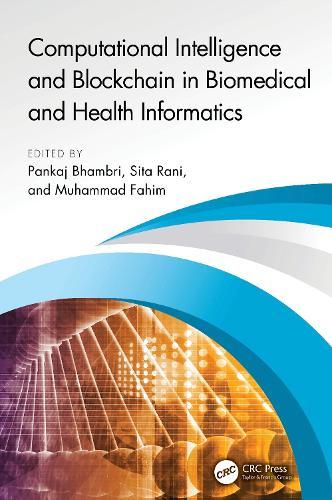
Computational Intelligence and Blockchain...
Paperback
$123.95 $99.47
Not in-store but you can order this